Semiconductors based on Arm architecture have traditionally been associated with smartphones and portable mobile devices. However, there is a notable trend where more laptops and desktop PCs are now being equipped with Arm chips. Traditionally, most of these computing devices have relied on x86 architecture-based processors. This brings up an important question: why is there a sudden shift towards Arm architecture, especially in PCs market? And what exactly are Arm chips, and how do they differ from x86 processors?
What is an Arm processor
Arm processors are system-in-package with central processing units (CPUs) built on the “Reduced Instruction Set Computing” (RISC) architecture developed by Arm Holdings, a British semiconductor designing company.
RISC architecture is designed to execute a smaller number of simplified computer instructions, allowing it to operate at higher speeds, performing more millions of instructions per second (MIPS).
Arm processors are known for power efficiency, which makes them ideal for battery-powered portable devices such as smartphones and tablets. Additionally, the architecture is highly scalable, enabling its use in a wide array of devices.
How are Arm processors different from traditional PC processors
The main difference between Arm and x86 processors is their instruction set architectures (ISA). Arm processors are built on RISC architecture, which simplifies the computing process by using fewer, simpler instructions, which can result in higher energy efficiency.
On the other hand, x86 processors utilise a Complex Instruction Set Computing (CISC) architecture, which includes a broader set of instructions, some of which are quite complex. This complexity can lead to increased power consumption and heat generation, making x86 processors more suitable for desktops and laptops where power consumption is less of an issue.
Traditionally, Arm processors have been more power-efficient but have lagged behind x86 processors in performance metric, particularly in single-threaded or sequential tasks. However, recent developments in Arm architecture have significantly reduced this performance gap.
Another key difference is software compatibility. Arm processors need software specifically built for their architecture. While this has been a limitation, it is rapidly changing with growing support from major software developers.
What are the advantages and disadvantages of Arm Processors
Arm processors offer several benefits, such as power efficiency, scalability, and generally lower manufacturing costs, potentially leading to cheaper devices. These processors are designed to be energy-efficient, making them ideal for smartphones and other portable devices.
However, Arm processors also have drawbacks. They have traditionally underperformed compared to x86 processors, particularly in high-computation tasks. Additionally, not all software are compatible with Arm architecture, although this is improving rapidly. The x86 ecosystem is more established, providing a broader range of hardware and software solutions, which has been a significant advantage for x86 processors.
Why is there a shift
Several factors drive the shift towards Arm processors in laptops and desktops. As battery life becomes increasingly important in portable devices, the energy efficiency of Arm processors offers a significant advantage over x86 processors. Recent developments have shown that Arm processors can deliver high performance while maintaining energy efficiency, as demonstrated by Apple’s M-series chips for MacBooks and iPads. Companies like Apple are moving towards a unified architecture across all their devices, facilitating a seamless user experience and simplifying software development.
Additionally, Arm’s licensing model allows companies to innovate and customise the architecture to meet their specific needs, resulting in a more tailored and optimised product.
Recently, Microsoft announced its Copilot+ platform for PCs based on the Qualcomm Snapdragon X-series chips, which are based on the Arm architecture. This notable move indicates that even the Microsoft Windows platform, which was traditionally focused on x86 architecture, is adopting Arm processors. This also suggests that Arm platforms are starting to challenge the long-standing dominance of x86 processors in the laptop and desktop segments.

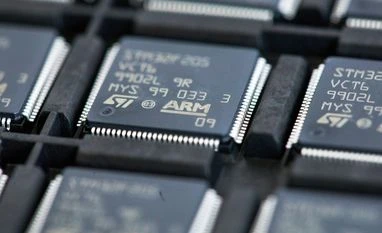 "Arm processors: What they are and why they are gaining ground in PC segment")


 Connect with us on WhatsApp