Towering over three metres tall, the South Island giant moa was a true titan of the bird world — the tallest bird ever to walk the Earth. For millennia, this flightless herbivore roamed the lush forests of New Zealand, browsing on trees and shrubs with unmatched dominance.
But its reign came to an abrupt end 600 years ago with the arrival of humans who hunted it to extinction. The legendary moa now lives on only through Māori oral traditions and scattered remnants: ancient bones, traces of mummified flesh, and the occasional feather — haunting clues to a lost giant.
Now, centuries after its disappearance, the giant bird is set to be the latest resurrection target for Colossal Biosciences — a Texas-based biotech company known for its audacious attempts to revive extinct creatures. On Tuesday, the company announced plans to "bring back" the moa within the next ten years, calling the project part of its growing mission to restore lost biodiversity.
“We're bringing back avian dinosaurs,” the company declared.
The South Island giant moa (Dinornis robustus) was the largest of nine known moa species, capable of reaching up to 12 feet (3.6 metres) in height. While all moas vanished within a few hundred years of human settlement in New Zealand, Colossal says it hopes to reverse that loss using advanced genetic engineering — in partnership with local Indigenous communities.
Can genetic engineering truly bring back lost species?
Colossal’s plans are ambitious, but they’re also raising serious scientific concerns. The company has already faced scrutiny for claiming earlier this year that it had brought back the dire wolf — an Ice Age predator believed to have gone extinct over 10,000 years ago. But after the reveal, many experts pushed back, calling it misleading. The recreated animals, they argued, were simply grey wolves with minor gene edits — not true dire wolves.
Even Beth Shapiro, Colossal’s chief scientist, later admitted the animals were “gray wolves with 20 edits” and clarified in an interview with New Scientist that “it’s not possible to bring something back that is identical to a species that used to be alive.” Despite this, the company has doubled down on its original claims, insisting it had indeed "resurrected" the dire wolf.
Similar questions now surround the moa project — and others in Colossal’s pipeline, including plans to bring back the woolly mammoth, the dodo, and the thylacine (also known as the Tasmanian tiger). Critics argue that, while the science may be impressive, the outcomes are far from true de-extinction.
“There is no existing genetic technology capable of truly bringing a lost species back to life — especially one that's been absent from its ecosystem and evolutionary journey for centuries,” said Philip Seddon, a zoology professor at the University of Otago, in a statement to the New Zealand Science Media Centre (NZSMC). “No matter the scientific precision, the outcome will never be a real moa. It cannot be. The moa was a singular marvel, shaped by thousands of years of natural evolution — a legacy that simply can’t be replicated in a lab.”
How Colossal plans to recreate the moa
According to Colossal, the process to “revive” the moa involves extracting DNA from preserved remains of all nine moa species and comparing it with the genetic codes of living birds. Speaking to Time magazine, Shapiro said scientists aim to identify key genetic traits unique to the moa and then engineer those into the genome of the emu or tinamou — two of the moa’s closest living relatives. The result would be a modified bird, bred to resemble the extinct giant as closely as possible.
But experts caution this will be, at best, a proxy — not a perfect clone.
Dr Tori Herridge, an evolutionary biologist at the University of Sheffield, who turned down an offer to join Colossal’s advisory board, is among those raising ethical and scientific red flags.
“Is de-extinction possible? No, it’s not,” she told The Guardian. “What we might eventually create are genetically modified organisms that mimic some traits of extinct species, based on what we think they looked like. But using the term ‘de-extinction’ skips over the hard questions. We’re not bringing back the mammoth, the moa or the dodo — we’re creating something new to engineer ecological change.”

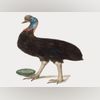 "Jurassic Park for real? Biotech firm to revive New Zealand's giant bird")


 Connect with us on WhatsApp