India’s Unified Payments Interface (UPI) could expand overseas through a mix of bilateral and multilateral arrangements, according to the
National Payments Corporation of India (NPCI). Speaking on the sidelines of the India AI Impact Summit 2026, NPCI Executive Director-Growth,
Sohini Rajola told Business Standard that the organisation is looking at “bilateral, multilateral, all kinds of different models” to take NPCI’s payments infrastructure abroad.
The comment was made in response to an earlier report that India is in talks to link UPI with
Alipay+, a global payments network operated by Ant International, which was founded by China’s Ant Group and later spun off as an independent entity headquartered in Singapore.
“So NPCI has an international arm, the NPCI International, which is working very closely across with various types of entities, whether it is real-time payment systems of other countries,” Rajola said in response to a question on whether India is looking only at bilateral links or also at broader platforms such as Alipay+. “We are looking at bilateral, multilateral, all kinds of different models to be able to take NPCI overseas. That continues to be a focus.”
UPI’s global expansion plans
At present, UPI works outside India mainly through bilateral arrangements with a limited set of countries, allowing users to make payments in select markets using Indian apps. The discussions reported earlier this month by Reuters about a possible link-up with Alipay+ point to a different approach: connecting UPI to a wider merchant network through a single global platform.
If such a link were to be approved, Indian users could potentially use UPI at overseas merchants that are already part of the Alipay+ network, rather than relying only on country-by-country integrations. The proposal, however, remains under consideration and is subject to regulatory and security reviews.
Rajola did not comment on any specific partner, but said NPCI International is working with multiple types of entities, including real-time payment systems in other countries, to expand UPI’s footprint.
The role of Project Nexus
In her response, Rajola also referred to Project Nexus, a multilateral initiative led by the Bank for International Settlements (BIS), in which the Reserve Bank of India is participating. Project Nexus is designed to interlink domestic instant payment systems across countries, allowing cross-border payments to move directly between national systems rather than through a series of bilateral connections.
Under the current plan, Nexus aims to connect the fast payment systems of India, Singapore, Thailand, Malaysia and the Philippines, with the possibility of adding more countries over time. The BIS has said such interlinking could enable cross-border payments to be completed within about a minute in most cases.
The RBI signed on to Project Nexus in 2024 as part of its broader effort to make cross-border retail payments faster and cheaper. The initiative is meant to address some of the limitations of a purely bilateral approach, which can be slow and complex to scale as more countries are added.

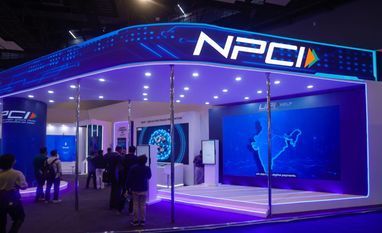 "NPCI exploring multilateral routes to link UPI with global payment systems")


 Connect with us on WhatsApp