3 min read Last Updated : Feb 03 2025 | 11:17 PM IST
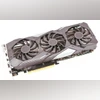
Three global technology players — Hewlett Packard Enterprise (HPE), Advanced Micro Devices (AMD), and Nvidia — are in discussions with the Indian government for a collaborative effort to help design and develop “indigenous” graphic processing units (GPUs), as well as in building the artificial intelligence (AI) ecosystem in the country.
Talks are ongoing, according to a senior government official, with an announcement on the final terms of collaboration expected soon. A spokesperson for Nvidia declined to comment, while HPE and AMD did not respond to queries.
In a recent interview with Business Standard, Minister for Electronics and Information Technology, Railways, and Information & Broadcasting Ashwini Vaishnaw stated that the government has begun consultations with the industry on India-designed GPUs and will support the initiative. He added that discussions have already taken place with the Centre for Development of Advanced Computing, as well as with global firms that could assist in the effort.
These discussions come as the Ministry of Electronics and Information Technology (Meity) finalises a list of companies empaneled to receive government support for procuring GPUs and developing computing infrastructure critical for AI. The government has received offers for more than 18,000 GPUs — nearly double its initial target of 10,000. For context, India’s largest supercomputer currently operates on 700 GPUs.
Industry applications, according to sources, include a range of GPUs, such as Nvidia’s H100, H200, A100, and L4; AMD’s MI 325X; and Intel’s Gaudi-2, among others.
Prices for on-demand computing start as low as Rs 64 per hour, according to industry sources. Vaishnaw has said the government aims to provide computing power to startups, research centers, and universities at roughly $1 per hour — one of the lowest rates globally.
While the proposed India-designed GPUs may not match the world’s most advanced processing power, sources familiar with the matter say they will offer a cost-effective solution with potential for innovation in AI applications. A similar approach has been seen in China, where the DeepSeek generative AI tool has developed a lower-cost model compared to ChatGPT, relying on less advanced GPUs with reduced processing power.
The Indian government is also considering asking proposals from startups and developers, offering incentives to create foundational AI models under its Rs 10,000 crore AI mission. Vaishnaw, in a recent press conference, stated that six developers are currently working on foundational AI models in the country.
Nvidia, for its part, has expressed interest in co-developing a chip in India by leveraging the country’s chip design capabilities. HPE plays a critical role in providing server infrastructure optimised for GPUs, enhancing AI-driven computational workloads. AMD, an old player in the GPU market since its 2006 acquisition of ATI Technologies, has advocated for a collaborative AI ecosystem, warning that monopolisation could stifle innovation and harm everyone.
The chips are up!
> India-designed GPU talks underway with CDAC, global firms