Home / Technology / Tech News / August 2 solar eclipse: Where to watch the longest eclipse of the century?
August 2 solar eclipse: Where to watch the longest eclipse of the century?
Solar Eclipse Date: The longest total solar eclipse of the century will actually occur on August 2, 2027-plunging parts of Europe, Africa, and the Middle East into rare midday darkness
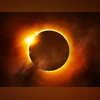
Solar eclipse on August 2, 2025. Photo: Shutterstock
Solar Eclipse Date and Time: A wave of social media buzz about a so-called "global blackout" on August 2, 2025, has triggered confusion—but astronomers are here to set the record straight.
According to Space.com, Nasa have confirmed that there will not be a solar eclipse in August 2025, despite a number of internet rumours that the world will "go dark for six minutes" during that time.
The real celestial spectacle everyone should be looking forward to isn’t happening in 2025—but on August 2, 2027. That’s when the longest total solar eclipse of the 21st century will sweep across 11 countries, offering millions a rare and awe-inspiring moment of daytime darkness.
Solar Eclipse August 2: When and where to watch?
The total solar eclipse on August 2, 2027, will cross 11 countries, making its way over parts of Europe, North Africa, and the Middle East. Key regions along the path of totality include Southern Spain, Gibraltar, North African nations: Morocco, Algeria, Tunisia, Libya, Egypt, Middle Eastern countries like Saudi Arabia and Yemen. East African nations like Sudan and Somalia. Residents outside this narrow path will see a partial eclipse across wide swathes of Europe, Africa, and western Asia.
Key timings for the Solar Eclipse on August 2, 2025
For precise local schedules, observers are advised to visit Time and Date or NASA's Eclipse Website. The event's universal (UTC) benchmarks are as follows, while specific times will differ depending on the location:
•Partial eclipse begins: 07:30 UTC
•Total eclipse begins: 08:23 UTC
•Total eclipse ends: 11:50 UTC
•Greatest eclipse: 10:07 UTC
•Partial eclipse ends: 12:44 UTC.
Why is this Solar Eclipse on August 2, 2027, so special?
The nearly flawless alignment of the Earth, Moon, and Sun makes the August 2 solar eclipse special. The Moon will be comparatively closer to Earth because of its elliptical orbit, which will enable it to block the Sun and create a broad shadow path that is roughly 160 miles (258 kilometres) across and extends over 9,462 miles (15,227 kilometres) across the surface of the Earth.
The path of totality, which covers over 1.5 million square miles (2.5 million square kilometres) due to this uncommon alignment, is exceptionally long and wide, although it still only covers a small portion of the Earth's surface.
When the Moon passes between the Earth and the Sun, it creates a shadow across the planet and, in some places, blocks the Sun's light entirely. This phenomenon is known as a solar eclipse.
Only those in the line of totality—a narrow strip of land where the Sun will be completely obscured will be able to see the total solar eclipse on August 2, 2027. Three primary categories are used to categorise the phenomenon:
•Partial Eclipse: When only a part of the Sun is obscured.
•Annular Eclipse: When the Moon is too far from Earth to entirely block the Sun, creating a “ring of fire.”
•Total Eclipse: When the Moon completely covers the Sun, creating moments of twilight during the day.

 "August 2 solar eclipse: Where to watch the longest eclipse of the century?")


 Connect with us on WhatsApp