In 2025, social media began to look less like a stream of updates and more like a gallery of alternate realities. Timelines filled with anime-style frames, vintage studio portraits, boxed action figures, and hyper-real 3D avatars, signalling a deeper shift beneath the visuals. Generative artificial intelligence (AI) moved from being a novelty to a cultural force, shaping how people presented themselves online. What made these trends stand out was not just the technology, but how quickly they entered mainstream Indian conversation.
From playful experiments to deeply emotional edits, these moments blurred the line between imagination, memory, and identity, redefining how stories were told online. Here’s an overview of the tech trends that took over social media by storm in 2025.
What began as a harmless burst of whimsy quickly turned into one of the internet’s most recognisable visual moments of the year. After the month of March, for weeks, social media feeds of Indian users were flooded with soft skies, glowing sunsets, oversized eyes and dreamlike cityscapes as users reimagined their lives through the lens of Studio Ghibli. From cafe visits and pet photos to wedding portraits and childhood memories, everything suddenly looked like it belonged in an animated film. The trend wasn’t just about aesthetics, it tapped into a shared mood of comfort, nostalgia and quiet escapism at a time when timelines felt overwhelmingly loud.
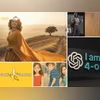
At its core, the Ghibli image trend involved transforming real-life photographs into illustrations inspired by the iconic Japanese animation studio’s style. The wave gathered pace after OpenAI’s GPT-4o model's native image generation feature within ChatGPT made it possible to recreate the hand-painted, pastel-heavy look with a simple prompt. What set it apart from earlier AI art fads was accessibility. You didn’t need design skills or expensive software. A prompt and a few clicks were enough to turn an everyday moment into something cinematic, gentle, and storybook-like. Early adopters shared their results on Instagram and X, sparking curiosity and imitation almost instantly.
In India, the trend exploded once creators, photographers, and even brands joined in, reworking everything from Old Delhi lanes to hill stations and family homes into Ghibli-style frames. It crossed platforms quickly, moving from Instagram Reels to WhatsApp profile photos and LinkedIn posts. Beyond the visuals, it became something more, reflecting a collective desire to slow down and romanticise the ordinary. For many, the appeal lay in seeing familiar Indian settings rendered with warmth and softness, proof that even the most routine scenes could feel magical when filtered through the right lens.
If Ghibli-style portraits softened the internet, the AI action figure trend did the opposite. It turned everyday people into sharply detailed plastic heroes, boxed, branded, and posed like collectibles from a toy store shelf. Actors, journalists, doctors, and even regular social media users suddenly appeared as limited-edition dolls, complete with accessories, nameplates, and dramatic lighting. What began as a playful visual experiment quickly became a recognisable internet format, flooding timelines and sparking debates about identity.
The trend gained momentum in April 2025, driven largely by ChatGPT’s image-generation capabilities. Users uploaded photos or wrote prompts that reimagined themselves as action figures, often styled as corporate leaders, warriors, creatives, or pop icons, sealed inside blister packs with exaggerated physiques and hyper-real textures. The format stood out because it mimicked real toy packaging so convincingly that many images initially passed as actual merchandise. As more public figures joined in, the trend crossed from niche AI circles into mainstream visibility.
In India, the action figure trend made headlines when business leaders and influencers shared their AI-generated doll versions, turning it into a cultural talking point rather than just a meme. Newsrooms picked it up as an example of how generative AI was reshaping self-expression, branding, and digital identity. While some embraced it as harmless fun, others questioned the privacy angle of sharing images with ChatGPT. Either way, the boxed-up avatars became one of 2025’s most recognisable AI-driven social media moments, blending nostalgia, tech novelty, and internet humour into a format that briefly dominated Indian timelines.
The vintage saree trend felt less like a filter and more like a time machine. Suddenly, in September, social media was flooded with portraits that looked pulled from old family albums, women posed in sarees, soft studio lighting, side-parted hair, and expressions straight out of the 1960s and 70s. The images carried a quiet nostalgia that stood apart from the hyper-saturated, fast-moving visuals dominating feeds, and that contrast is exactly what made the trend stop people mid-scroll.
At its core, the trend involved users generating retro-style portraits using Google Gemini 2.5 Flash Image model, popularly known as Nano Banana. By prompting the AI with references to vintage Indian photography, classic saree drapes, film-era aesthetics, and analogue textures, users recreated a distinctly old-world look, even when starting with modern selfies. The appeal lay in how convincingly these tools mimicked the softness, grain, and compositional restraint of pre-digital photography, making the results feel authentic rather than gimmicky.
In India, the trend quickly took on cultural weight. Celebrities, influencers, and everyday users shared their AI-generated “vintage portraits,” often pairing them with stories about mothers, grandmothers, or forgotten family photographs. It sparked discussions around textile heritage, regional saree styles, and the enduring elegance of Indian cinema’s golden era.
The rise of hyper-realistic 3D figurines was one of those internet moments in 2025 that felt playful. Social feeds in India suddenly filled up with miniature versions of people standing on desks, holding coffee mugs, wearing office lanyards, wedding outfits, gym gear, or even cricket jerseys. These weren’t toys you could buy online, but AI-generated digital figurines that looked ready to be 3D-printed. The format struck a chord because it blended humour and tech novelty, making it instantly shareable.
At the centre of this trend was Google's Gemini 2.5 Flash Image (Nano Banana), a generative AI tool that allowed users to create stylised yet highly detailed 3D figurines from a picture or short prompt. This trend gained unexpected mainstream attention in India around September 2025, as creators began using it to turn everyday portraits into desk-sized avatars. Brands used them for campaign visuals, and individuals treated them as digital collectibles of themselves. The appeal lay in the balance — realistic enough to feel personal, yet stylised.
The trend snowballed once Indian creators, designers, and regular users picked it up, pushing it beyond tech circles into mainstream social media and news coverage. What started as a niche AI demo quickly became a trend, raising conversations around digital identity, ownership of likeness, and the future of personal avatars. Like the Ghibli and vintage saree waves, the 3D figurine trend showed how generative AI in 2025 wasn’t just about productivity or art, but about self-expression — turning people themselves into the content.
Adding parents/relatives to pictures
Few AI trends in 2025 hit the internet as quietly and emotionally as this one. Amid flashy filters and playful edits, social media in India began filling up with images that stopped people mid-scroll: family photographs where a long-lost parent, grandparent, or sibling appeared as if they had never left. Weddings where a late father stood beside the bride, birthdays where a mother lost years ago smiled from the background, and everyday family portraits quietly rewritten by artificial intelligence. What began as deeply personal experiments soon became one of the most emotionally charged AI moments of the year.
The trend revolved around using generative AI tools to insert deceased relatives into existing photographs or restore old, damaged images. Initially, these edits were shared privately or within small family circles. However, soon several such posts went viral on Instagram, Facebook, and X, especially when users explained the story behind the image, turning a technical AI edit into a powerful narrative about memory, loss, and longing.
In India, the trend resonated deeply because of the country’s strong emotional ties to family and ancestry. Many posts sparked large comment threads filled with shared grief, personal stories, and debates about whether such edits were healing or unsettling. While some critics raised ethical concerns about consent and digital resurrection, for many users these images offered a sense of closure or comfort rather than spectacle. Unlike most viral AI trends driven by novelty, this one stood out for its sincerity, proving that technology in 2025 wasn’t just reshaping creativity, it was also reshaping how people process absence, remembrance, and love.


 "Year-ender 2025: Ghibli to Nano Banana, trends that took over social media")


