


Foldable iPhone to cheaper MacBook, GTA 6: What to look forward to in 2026
Foldable iPhones, tri-fold smartphones, XR glasses, affordable MacBooks and the long-delayed GTA 6 suggests a year packed with overdue launches and notable experiments
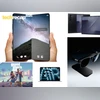 "Year Ender 2025: From foldable iPhone to GTA 6, here's what you should be looking forward to in 2026.")
Year Ender 2025: From foldable iPhone to GTA 6, here's what you should be looking forward to in 2026.
Listen to This Article
2026 is expected to bring long-rumoured products closer to reality, from Apple’s first foldable iPhone to Google’s Android-based desktop OS — alongside other releases such as Samsung Galaxy Z TriFold, Google and XReal’s Project Aura XR glasses, cheaper MacBook and OLED displays in MacBook Pro. Add GTA 6 to the mix, and 2026 will suddenly look less like a routine upgrade cycle and more like a genuine reset moment for consumer technology. Here’s an overview of what you can expect from 2026.
Foldable iPhone
Companies such as Samsung, Google, Motorola, OnePlus, OPPO, and Vivo have been steadily pushing the boundaries of foldable smartphones, even exploring tri-fold designs in recent years. Apple, meanwhile, has continued to refine its slab-style lineup, most recently with the ultra-slim iPhone Air. However, long-running reports suggest that Apple may finally enter the foldable segment in 2026, a move many tech enthusiasts, myself included, are eager to see.
According to these reports, Apple’s first foldable iPhone may use a book-style design similar to placing two iPhone Air units side by side, but is likely to remain thin thanks to components being spread across two panels — an approach seen in Samsung’s Galaxy Z Fold 7. The device is expected to measure around 4.5 to 4.8mm when unfolded and 9 to 9.5mm when folded, potentially with a titanium frame for added durability. For comparison, the Galaxy Z Fold 7 is 8.9mm thick when folded and 4.2mm when unfolded.
Hardware expectations include a 5.5-inch outer display, a 7.8-inch inner display, and a 48MP main rear camera likely paired with either an ultra-wide or telephoto lens. For the front, it is likely to sport two 24MP sensors. Apple is also said to be working on a crease-free folding screen using in-cell touch technology.
Expected launch: September 2026
Also Read

 "Zoom AI Companion 3.0")
 "Nifty, Sensex, record highs, markets, investing strategy, gold prices, commodity surge, silver prices")
 "Emigration, immigration, jobs abroad, indian students abroad")
 "Tech Wrap December 15")
 "Modi, Narendra Modi, Nitish Kumar")
Samsung Tri-Fold
When the foldable smartphone segment felt like it was getting saturated, Huawei and Samsung raised the bar with the revelation that they were developing tri-fold smartphones. Huawei became the first to introduce its first-ever double-folding smartphone, the Huawei Mate XT, back in September last year. Following that, after more than a year, Samsung launched its Galaxy Z TriFold in South Korea this December. The company is expected to release it for other select global markets in January. This will be the world’s second commercially available tri-fold smartphone. Hence, it has got eyebrows raised across the globe to see if it will beat Huawei in the tri-fold game or not.
For the uninitiated, Samsung says the Galaxy Z TriFold introduces a new tri-fold display design with a reinforced top layer and a shock-absorbing backing for added durability, alongside an updated Armor FlexHinge system that uses two differently sized titanium hinges with a dual-rail structure, allowing the side panels to fold inward over the centre panel with minimal gaps and a phone-like form when closed, all within an aluminium alloy frame. The device measures 12.9mm when folded, weighs 309g, and features uneven panel thicknesses — 4.2mm for the centre panel with the USB-C port, 3.9mm for the panel housing the SIM tray, and 4.0mm for the third panel.
It packs largest battery seen in a Samsung foldable to date, a 5,600mAh three-cell unit spread across all three panels with 45W wired charging. On the software side, the 10-inch tri-fold display supports running up to three portrait apps simultaneously, flexible window resizing and a taskbar, while also becoming Samsung’s first smartphone to offer standalone Samsung DeX without an external display. Galaxy AI features such as Photo Assist with Generative Edit and Sketch-to-Image are optimised for the larger screen, enabling side-by-side comparisons during edits.
Expected global launch: January 2026
XR glasses and headsets
Google hosted “The Android Show: XR Edition” this month, where it unveiled its extended reality (XR) glasses built with XReal, which is called Project Aura. It is an Android XR platform-based glasses that features a 70-degree field of view and optical see-through technology that overlays digital content onto a user’s real-world surroundings.
As per Google, the system can display multiple floating windows. If you are unable to visualise it, then let me help you out. If anyone has watched any Marvel’s Avengers movies in which Tony Stark was working on transparent displays in the air, then this is essentially very similar in nature. Here too, you’ll see floating windows that you can control with your hand gestures. Imagine, you’ll be as cool as Iron Man.
As per Google, these XR glasses are aimed at enabling work or entertainment use without blocking visibility. The company also noted that the device is designed for everyday, hands-on use, including scenarios like watching recipe videos while cooking or referring to guided instructions when fixing household appliances. The XR wired glasses rely on a tethered puck that houses the primary processing hardware and battery, and this puck also functions as a trackpad for navigation. Google has only unveiled the product this December, and as per XReal’s website, Project Aura will be available for purchase sometime next year.
Additionally, Samsung is also expected to launch its Samsung Galaxy XR headset in select regions, other than South Korea and the US, where it is currently available for purchase. This means that 2026 is likely going to be the launch year of both XR glasses and headsets in more global regions. For the unuaware, Samsung’s Galaxy XR headset focuses on blending immersive and everyday computing through natural controls like hand gestures, eye tracking and voice, while allowing users to switch between full VR and passthrough views for multitasking. Built on Android XR, it supports a wide range of Android apps from Google Play, major streaming platforms and XR-optimised experiences. The headset enables 2D photos and videos to be converted into 3D, offers immersive 3D exploration through Google Maps, and adds AI-driven assistance via Gemini Live for real-time contextual help. Productivity is supported through multi-window app layouts, peripheral connectivity and creative tools, alongside XR gaming and partner apps available at launch.
Expected launch: 2026
Cheaper MacBook, OLED displays in MacBook Pro
Apple is reportedly planning to introduce a more affordable MacBook in 2026. This is going to be a big development as the only device that is priced below the MacBook Air, which can be used like a laptop with a keyboard and mouse, is the iPad Air.
According to analyst Ming-Chi Kuo and a report from MacRumors, Apple’s upcoming affordable MacBook could feature a display close to 13 inches, slightly smaller than the 13.6-inch screen on the MacBook Air, with only a marginal difference in overall size. The device’s thickness remains unclear, though a slim profile may not be prioritised due to cost considerations. The budget MacBook is expected to use a standard LCD panel, without mini-LED technology or ProMotion support, and could be offered in brighter colour options such as silver, blue, pink, and yellow, similar to the iMac lineup. It may be powered by Apple’s A18 Pro chip, which is said to deliver performance on par with the M1 in some tasks, while exceeding it in others.
According to Bloomberg’s Mark Gurman and MacRumors, Apple is expected to bring OLED displays to the MacBook Pro next year, with the upgrade likely arriving alongside the model’s next major redesign, and potentially adding touchscreen support as well. The MacBook Air, meanwhile, will continue using an LCD panel in the near term, including its anticipated M5 refresh early next year, with the shift to OLED projected around 2028, possibly debuting with M7 chips. When the transition happens, OLED technology is expected to deliver tangible benefits over LCD, including brighter displays, deeper blacks and higher contrast, improved power efficiency, and potential gains in battery life.
Expected launch: 2026
GTA 6
One of the biggest trends of this year has been GTA 6. The Rockstar Games developed title was initially supposed to be out by now i.e., Fall of 2025. However, the publisher pushed the launch date to May 26, 2026, while giving explanation that it needs the extra time to “exceed your expectations.” Then again last month, Rockstar Games announced that the launch of GTA 6 has been pushed back further. It will now be released on November 19, 2026. Due to these delays and the alleged videos of the gameplay surfacing ahead of the launch, it continues to make headlines every now and then.
However, despite the delays, it appears that the gaming community is still very much looking forward to the release of GTA 6. What further solidified it was that at “The Game Awards 2025,” GTA 6 won the title for being the “Most Anticipated Game.” It would be safe to say that this is probably one of the titles that the majority of gamers are looking forward to.
There’s a rumour doing the rounds which might make this wait worthwhile, though. According to several reports, GTA 6 is expected to run at 60 frames per second on the PlayStation 5 Pro. To achieve this, Rockstar Games might be collaborating with Sony to fine-tune the game for the upgraded console, ensuring improved performance across various graphic modes.
Expected launch: November 19, 2026
Tomb Raider: Legacy of Atlantis
It has been outlined as a reimagining of Lara Croft’s 1996 debut, developed by Crystal Dynamics in collaboration with Flying Wild Hog. The game revisits classic Tomb Raider locations inspired by Peru, Greece, Egypt, and a Mediterranean island, with a focus on trap-filled tombs, environmental puzzles, and acrobatic traversal. The publisher, Amazon Game Studios, said that while the structure and puzzle design are intended to reflect the original game, the title updates the experience with modern visuals and refined mechanics, positioning it as an entry point for new players while retaining familiar elements for long-time fans.
It will launch in 2026 for PlayStation 5, Xbox Series X and S, and PC.
Google’s “Aluminium OS”
Another significant developments to watch in 2026 is Google’s plan to challenge Windows and macOS with a new desktop platform which is likely to be called Aluminium OS. Google has earlier confirmed that it is bringing Android for PC, and will launch it in 2026. When it materialises, the move could impact how users work across laptops and tablets by unifying Android and ChromeOS into a single system. For consumers, this could translate into better app continuity between phones and PCs, deeper AI-driven features, and more competitive alternatives in a market long dominated by two operating systems.
Aluminium OS is said to be built on Android, with AI at its core. A Google job listing that surfaced sometime back referencing a “new Aluminium, Android-based operating system” reinforces hints dropped earlier at Qualcomm’s Snapdragon Summit 2025, where Google confirmed Android for PCs is coming next year. The platform is expected to integrate Google’s Gemini AI deeply across larger screens, extending capabilities already seen on premium smartphones to laptops and tablets.
The listing also points to an ambitious hardware strategy, with Aluminium OS planned for laptops, tablets, detachables, and other form factors across both mainstream and premium segments. This suggests Google intends to position Aluminium OS as a direct competitor to Windows and macOS, not just as a successor to ChromeOS. While ChromeOS is expected to coexist in the short term, the long-term goal appears to be a gradual transition to Aluminium OS, potentially making 2026 the starting point of a major shift in Google’s desktop ambitions.
Expected launch: 2026
More From This Section
 "Amazon Kindle's 'Ask This Book' feature")
 "Google's Dark Web Report")
 "LG Micro RGB evo TV")
 "Apple iOS 26")
 "OPPO Reno 15C")
Topics : Technology News year ender 2025 Gaming
Don't miss the most important news and views of the day. Get them on our Telegram channel
First Published: Dec 16 2025 | 1:43 PM IST