
China's 'reunification' with Taiwan is 'inevitable', says Xi Jinping
Taiwan remains a sensitive issue in US-China relations. During a recent summit with US President Joe Biden, Xi asserted that China's "reunification" with Taiwan is "unstoppable"
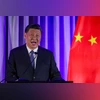 "China's 'reunification' with Taiwan is 'inevitable', says Xi Jinping")
Explore Business Standard
Taiwan remains a sensitive issue in US-China relations. During a recent summit with US President Joe Biden, Xi asserted that China's "reunification" with Taiwan is "unstoppable"
Chinese leader Xi Jinping has claimed that the "reunification" of Taiwan with China is "inevitable," emphasising Beijing's longstanding stance ahead of a crucial election in Taiwan next month, CNN reported.
Xi made these remarks during an address marking the 130th anniversary of the birth of Mao Zedong, the founder of the People's Republic of China.
"The realisation of the complete reunification with the motherland is an inevitable course of development, is righteous and what the people want. The motherland must and will be reunified," said Xi.
Xi's statements reiterate China's claim over Taiwan, a self-ruled island democracy, and align with his broader goal to enhance China's global power and stature. The timing is significant as Taiwan approaches a critical presidential vote, where political parties' positions on relations with China often serve as a gauge of public sentiment on Beijing, as reported by CNN.
Taiwan President Tsai Ing-wen, who has faced increased pressure from Beijing during her tenure, is widely perceived as strengthening Taiwan's unofficial ties with the United States. The leading candidate for the Democratic Progressive Party, Vice President Lai Ching-te, is currently ahead in the polls but is not favoured by Chinese officials.
China's Communist Party considers Taiwan its own territory, despite never having controlled it. While emphasising a preference for peaceful "reunification," Chinese officials have not ruled out the use of force. Xi's speech included a veiled warning, urging the promotion of peaceful cross-strait ties and preventing any attempts to separate Taiwan from China.
Taiwan remains a sensitive issue in US-China relations. During a recent summit with US President Joe Biden, Xi asserted that China's "reunification" with Taiwan is "unstoppable." The United States maintains an unofficial relationship with Taiwan, recognizing China's position that Taiwan is part of its territory. However, the US is obligated by law to provide Taiwan with the means to defend itself.
The historical roots of the Taiwan-China relationship trace back to 1949 when General Chiang Kai-shek fled with his nationalist forces to Taiwan after Mao's Red Army gained control in the Chinese Civil War.
Xi's speech also called on Chinese citizens to "never forget" Mao and the Communist Party's "original aspiration and founding mission" as they advance the cause of Chinese modernisation, CNN reported.
(Only the headline and picture of this report may have been reworked by the Business Standard staff; the rest of the content is auto-generated from a syndicated feed.)
First Published: Dec 28 2023 | 8:36 AM IST


