
China urges US to respect facts, trade rules amid Trump tariff threat
This comes after China's Ministry of Commerce (MOFCOM) on Tuesday announced sanctions against five US-based subsidiaries of South Korea's Hanwha Ocean
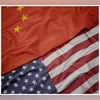 "China urges US to respect facts, trade rules amid Trump tariff threat")
Explore Business Standard

Associate Sponsors
Co-sponsor
This comes after China's Ministry of Commerce (MOFCOM) on Tuesday announced sanctions against five US-based subsidiaries of South Korea's Hanwha Ocean
China has urged the United States and related companies to respect facts, follow international trade rules, and stop actions that harm China's interests, after US President Donald Trump threatened to impose a 100 per cent tariff on Chinese goods.
Chinese Foreign Ministry spokesperson Lin Jian said, "China calls on the U.S. as well as companies concerned to respect facts and multilateral trade rules, abide by the principles of market economy and fair competition, correct the wrong approach as soon as possible and stop harming China's interests."
This comes after China's Ministry of Commerce (MOFCOM) on Tuesday announced sanctions against five US-based subsidiaries of South Korea's Hanwha Ocean Co, in response to the US' Section 301 investigation and related measures targeting China's maritime, logistics and shipbuilding industries, Global Times reported.
According to Order No. 6 of 2025 issued by the Ministry of Commerce's Bureau of Security and Control, this decision is made in compliance with China's Anti-Foreign Sanctions Law and its implementing provisions.
The order stated that the US move to conduct and implement Section 301 measures against China's maritime, logistics, and shipbuilding sectors "seriously violates international law and the basic norms governing international relations, and gravely undermines the legitimate rights and interests of Chinese enterprises."
According to the Chinese state media, the country's commerce ministry has identified the five subsidiaries as Hanwha Shipping LLC, Hanwha Philly Shipyard Inc, Hanwha Ocean USA International LLC, Hanwha Shipping Holdings LLC, and HS USA Holdings Corp.China's Transport Ministry has initiated an investigation into how the US Section 301 investigation affects the security and development interests of its shipping and shipbuilding sectors, as well as related industrial and supply chains, according to the official news agency Xinhua
The statement from China's Ministry of Foreign Affairs came amid growing trade tensions between the two countries. It followed a series of new trade restrictions announced by both sides, marking a sharp escalation in their economic dispute.
China introduced new port fees on US ships arriving at Chinese ports, effective from October 14. According to the Chinese Transport Ministry, the fees would start at 400 yuan (around USD 56) per net ton and increase annually for the next three years.
Beijing said the move was a direct response to Washington's decision to impose similar charges on Chinese ships entering American ports, calling the US action a violation of World Trade Organization (WTO) rules and the China-US maritime transport agreement.
Earlier, Trump announced that the US would impose an additional 100 per cent tariff on Chinese imports starting November 1, raising total duties on Chinese goods to 130 per cent.
In a post on Truth Social, Trump said, "In response to China's export control on rare earths and related items, the United States will impose a tariff of 100 per cent on China, over and above any tariff that they are currently paying."
He also said the US would tighten export controls on key software and technology, accusing Beijing of taking a "hostile" position in trade relations.
Beijing's Ministry of Commerce responded that "willful threats of high tariffs are not the right way to get along with China," adding that China does not want a trade war but is "not afraid of it either."
China defended its recent export controls on rare earth materials as a lawful step to refine its export management system and safeguard national security. It accused the US of "double standards" and "abusing export control measures" against Chinese companies.
"The US side cannot seek talks on one hand while threatening to introduce new restrictive measures on the other," the ministry said, urging Washington to resolve disputes through mutual respect and dialogue.
Since the China-US trade talks in Madrid last month, Beijing said, the US has expanded restrictions by adding more Chinese firms to the Entity List and extending Section 301 measures to the shipbuilding sector.
China warned that these actions have "seriously harmed" its interests and damaged the atmosphere for trade talks. It called on the US to "correct its wrong practices" and "properly manage differences through dialogue," to ensure stable and sustainable relations.
(Only the headline and picture of this report may have been reworked by the Business Standard staff; the rest of the content is auto-generated from a syndicated feed.)
First Published: Oct 16 2025 | 9:34 AM IST

