
Fatal blast at US steel's Clairton plant sparks doubts over its future
The explosion now could test Nippon Steel's resolve in propping up the nearly 110-year-old Clairton plant, or at least force it to spend more than it had anticipated
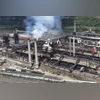 "Fatal blast at US steel's Clairton plant sparks doubts over its future")
WebinarsNew
Deep DiveNew
Explore Business Standard
The explosion now could test Nippon Steel's resolve in propping up the nearly 110-year-old Clairton plant, or at least force it to spend more than it had anticipated
The fatal explosion last week at US Steel's Pittsburgh-area coal-processing plant has revived debate about its future just as the iconic American company was emerging from a long period of uncertainty.
The fortunes of steelmaking in the US along with profits, share prices and steel prices have been buoyed by years of friendly administrations in Washington that slapped tariffs on foreign imports and bolstered the industry's anti-competitive trade cases against China.
Most recently, President Donald Trump's administration postponed new hazardous air pollution requirements for the nation's roughly dozen coke plants, like Clairton, and he approved US Steel's nearly USD 15 billion acquisition by Japanese steelmaker Nippon Steel.
Nippon Steel's promised infusion of cash has brought vows that steelmaking will continue in the Mon Valley, a river valley south of Pittsburgh long synonymous with steelmaking.
We're investing money here. And we wouldn't have done the deal with Nippon Steel if we weren't absolutely sure that we were going to have an enduring future here in the Mon Valley, David Burritt, US Steel's CEO, told a news conference the day after the explosion. You can count on this facility to be around for a long, long time.
Will the explosion change anything? The explosion killed two workers and hospitalised 10 with a blast so powerful that it took hours to find two missing workers beneath charred wreckage and rubble. The cause is under investigation.
The plant is considered the largest coking operation in North America and, along with a blast furnace and finishing mill up the Monongahela River, is one of a handful of integrated steelmaking operations left in the US.
The explosion now could test Nippon Steel's resolve in propping up the nearly 110-year-old Clairton plant, or at least force it to spend more than it had anticipated.
Nippon Steel didn't respond to a question as to whether the explosion will change its approach to the plant.
Rather, a spokesperson for the company said its commitment to the Mon Valley remains strong and that it sent technical experts to work with the local teams in the Clairton Plant, and to provide our full support.
Meanwhile, Burritt said he had talked to top Nippon Steel officials after the explosion and that this facility and the Mon Valley are here to stay.
US Steel officials maintain that safety is their top priority and that they spend USD 100 million a year on environmental compliance at Clairton alone.
However, repairing Clairton could be expensive, an investigation into the explosion could turn up more problems, and an official from the United Steelworkers union said it's a constant struggle to get US Steel to invest in its plants.
Besides that, production at the facility could be affected for some time. The plant has six batteries of ovens and two where the explosion occurred were damaged. Two others are on a reduced production schedule because of the explosion.
There is no timeline to get the damaged batteries running again, US Steel said.
Accidents are nothing new at Clairton Accidents are nothing new at Clairton, which heats coal to high temperatures to make coke, a key component in steelmaking, and produces combustible gases as byproducts.
An explosion in February injured two workers.
Even as Nippon Steel was closing the deal in June, a breakdown at the plant dealt three days of a rotten egg odour into the air around it from elevated hydrogen sulfide emissions, the environmental group GASP reported.
The Breathe Project, a public health organisation, said US Steel has been forced to pay USD 57 million in fines and settlements since January 1, 2020 for problems at the Clairton plant.
A lawsuit over a Christmas Eve fire at the Clairton plant in 2018 that saturated the area's air for weeks with sulfur dioxide produced a withering assessment of conditions there.
An engineer for the environmental groups that sued wrote that he found no indication that US Steel has an effective, comprehensive maintenance programme for the Clairton plant.
The Clairton plant, he wrote, is inherently dangerous because of the combination of its deficient maintenance and its defective design.
US Steel settled, agreeing to spend millions on upgrades.
Matthew Mehalik, executive director of the Breathe Project, said US Steel has shown more willingness to spend money on fines, lobbying the government and buying back shares to reward shareholders than making its plants safe.
Will Clairton be modernised? It's not clear whether Nippon Steel will change Clairton.
Central to Trump's approval of the acquisition was Nippon Steel's promises to invest USD 11 billion into US Steel's aging plants and to give the federal government a say in decisions involving domestic steel production, including plant closings.
But much of the USD 2.2 billion that Nippon Steel has earmarked for the Mon Valley plants is expected to go toward upgrading the finishing mill, or building a new one.
For years before the acquisition, US Steel had signalled that the Mon Valley was on the chopping block.
That left workers there uncertain whether they'd have jobs in a couple years and whispering that US Steel couldn't fill openings because nobody believed the jobs would exist much longer.
Relics of steelmaking's past In many ways, US Steel's Mon Valley plants are relics of steelmaking's past.
In the early 1970s, US steel production led the world and was at an all-time high, thanks to 62 coke plants that fed 141 blast furnaces. Nobody in the US has built a blast furnace since then, as foreign competition devastated the American steel industry and coal fell out of favour.
Now, China is dominant in steel and heavily invested in coal-based steelmaking. In the US, there are barely a dozen coke plants and blast furnaces left, as the country's steelmaking has shifted to cheaper electric arc furnaces that use electricity, not coal.
Blast furnaces won't entirely go away, analysts say, since they produce metals that are preferred by automakers, appliance makers and oil and gas exploration firms.
Still, Christopher Briem, an economist at the University of Pittsburgh's Centre for Social and Urban Research, questioned whether the Clairton plant really will survive much longer, given its age and condition.
It could be particularly vulnerable if the economy slides into recession or the fundamentals of the American steel market shift, he said.
I'm not quite sure it's all set in stone as people believe, Briem said.
(Only the headline and picture of this report may have been reworked by the Business Standard staff; the rest of the content is auto-generated from a syndicated feed.)
First Published: Aug 17 2025 | 9:23 PM IST

