By Karishma Vaswani
From Nepal to Indonesia, Sri Lanka to Bangladesh, Asia’s youth are furious. Protests show a generation unwilling to accept inequality and injustice as their destiny. But for lasting political change to be achieved, this rage must be channeled into reform.
Raw anger is spilling out onto the streets. On Tuesday, Nepal’s Prime Minister KP Sharma Oli resigned after two days of demonstrations over a sweeping social-media ban. At least 19 people were killed and hundreds more injured, after scores of Gen-Z protesters clashed with police. The ban was swiftly scrapped, but the disenchantment has continued. The army has stepped in, urging people to back down.
Young Nepalis are fed up. Blocking the apps was the immediate catalyst for their frustrations, another reminder of living under a government that is out of touch with their concerns. These platforms are critical tools in a country where approximately one in four live below the national poverty line. They’re a way to receive remittances and stay in touch with friends and loved ones.
Indonesia has witnessed similar scenes. In late August, outrage erupted after lawmakers were awarded lavish housing allowances — nearly 10 times the monthly minimum wage — while ordinary citizens grappled with soaring living costs. The death of a motorcycle taxi driver, run over by a police vehicle, further inflamed tensions.
Demonstrators looted the homes of top lawmakers, torched cars and vandalised government buildings, in some of the worst violence in decades. Under mounting pressure, President Prabowo Subianto rolled back the perks, pledging greater accountability. This week, the widely respected Finance Minister, Sri Mulyani Indrawati, was removed. It’s speculated she was sacrificed to calm public anger.
At first glance, these protests appear unconnected, but there are common grievances. These are both nations with youthful populations: About half of Indonesia’s total population is under 30, while in Nepal, it’s around 56 per cent. High unemployment rates are an issue, as is a widening income gap.
These demonstrations also highlight how collective youth action can force governments into retreat. Still, outrage alone is insufficient. Asia’s history of activism shows that demonstrations can topple leaders, but without meaningful political reforms, they rarely transform societies.
Bangladesh illustrates both promise and peril. In 2024, a student-led uprising forced the nation’s longest-standing autocrat Prime Minister Sheikh Hasina to flee. Hundreds died and many more were injured in the violence. The demonstrations led to a caretaker government helmed by interim leader and Nobel Peace Prize laureate Muhammad Yunus.
He’s promised to restore order and rejuvenate democratic institutions, encouraging young people to get involved. Elections are expected in early 2026, but whether Bangladesh transforms into a functioning democracy will depend on how credible they are.
Sri Lanka’s experience is a cautionary tale. In 2022, a largely youth-led protest movement known as the Aragalaya, taking its name from the Sinhala word for struggle, forced the resignation of President Gotabaya Rajapaksa. His incompetent nearly three-year rule ended with the nation defaulting on its debt in an unprecedented economic meltdown. The government’s foreign reserve crisis meant it was unable to pay for fuel imports, leading to long petrol lines and daily 13-hour power cuts.
But the movement lacked a coherent long-term plan, and the old guard quickly regrouped. Ranil Wickremesinghe, another member of the discredited political elite, was installed as president. Only last year did voters finally find an alternative, electing the wildly popular Anura Kumara Dissanayake, eventually giving his National People’s Power coalition a parliamentary majority. His appeal lies partly in connecting with younger voters, offering a contrast to the cronyism and corruption of politicians from an earlier era.
Asia’s youth movements could draw lessons from farther afield. In New York, the meteoric rise of Zohran Mamdani from state assemblyman to leading mayoral contender, is notable. Using viral social media campaigns and policies that speak directly to young voters, Mamdani’s popularity stems from his authenticity, a sense that he empathizes with the people he says he wants to serve. This solutions-driven idealism has channeled what could have been rage into agency.
One name that’s been mentioned as a potential leader in Nepal is the mayor of Kathmandu Balendra Shah. The 35-year-old engineer-turned-rapper has impressed voters with his campaign to clean up the city’s waterways, while his songs have raised the issue of corruption and inequality in the Himalayan nation.
Protests have to evolve beyond the streets and into the places where power rests, and policies are made. Demands should focus not simply on toppling corrupt politicians or torching government buildings, but on reforming courts, electoral commissions and creating independent watchdogs. Movements rooted solely among students or youth risk petering out after the anger fades. Building viable political parties or coalitions that can credibly contest elections is essential.
The Arab Spring offers sobering lessons. More than a decade ago, youthful revolts toppled dictatorships from Tunisia to Egypt and Libya. But the movement collapsed and ended with worsening repression in parts of the region.
Protesting can be thrilling and a bit addictive — but it alone can’t be the endgame. Otherwise this generation risks squandering its opportunity for change. Burned buildings and trashed department stores will only ensure the same power structures return, with a vengeance. (Disclaimer: This is a Bloomberg Opinion piece, and these are the personal opinions of the writer. They do not reflect the views of www.business-standard.com or the Business Standard newspaper)

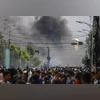 "Gen-Z protesters across Asia challenge old guard, demand lasting reform")


 Connect with us on WhatsApp