
Hong Kong high-rise fire puts spotlight on bamboo scaffolding safety
Officials are investigating why the scaffolding and other construction materials used in renovations to the outsides of the buildings caught fire
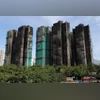 "Hong Kong high-rise fire puts spotlight on bamboo scaffolding safety")
Explore Business Standard
Officials are investigating why the scaffolding and other construction materials used in renovations to the outsides of the buildings caught fire
While the exact cause of the deadly inferno that swept across a Hong Kong apartment complex remains unknown, questions have been raised about the role of the bamboo scaffolding that enveloped the buildings at the time of the fire.
The blaze, which has left at least 94 dead, has focused attention on the use of the ancient construction technique dating back over 1,000 years.
Bamboo poles lashed together using wire and other strong materials are often found at construction sites in Southeast Asia. Hong Kong is one of the few major cities where such scaffolding is a common sight.
Officials said Wednesday's fire started on the external scaffolding of a 32-story tower in the suburb of Tai Po, spread to the inside of the building and then to six other towers, likely aided by windy conditions.
Officials are investigating why the scaffolding and other construction materials used in renovations to the outsides of the buildings caught fire.
Bamboo is a fast-growing plant that forms tall, hollow stalks packed with strong fibres. The bamboo poles, harvested from 3-year-old bamboo plants, are lightweight, inexpensive and easy to transport. They're seen as easier to install and remove from the kinds of tight spaces found in a city as densely populated as Hong Kong.
In the case of an accident, such as a collapse, they are seen as less dangerous than heavy metal poles. Bamboo scaffolding is also used for temporary structures, such as outdoor theatres.
The bamboo poles are usually are imported from Zhaoxing, in neighbouring Guangdong province, or from the nearby southern provinces of Guangxi or Guilin.
But even Hong Kong is moving toward phasing out use of bamboo.
A memo from Hong Kong's secretary for development in March noted that the city planned to drive a wider adoption of metal scaffolding in public building works progressively.
According to Construction Industry Council, there are about 2,500 registered bamboo scaffolders in Hong Kong. Bamboo scaffolding-related accidents have claimed 23 lives since 2018.
City leader John Lee said officials have met with with industry representatives to discuss a switch to metal scaffolding.
Eric Chan, the Chief Secretary for Administration, acknowledged that traditional bamboo scaffolding is inferior to metal for fire safety. For safety reasons, the government believes that a complete switch to metal scaffolding should be implemented in suitable working environments, he said.
Ehsan Noroozinejad, a professor at Western Sydney University's Urban Transformations Research Centre, said steel or aluminum scaffolding is non-combustible, stronger and lasts longer, though it is heavier, slower to set up and costs more.
For high-risk, occupied towers, metal is the safer baseline, Noroozinejad said. If bamboo is used, it must come with strict fire and inspection controls.
In the case of the blaze at the high-rise residential complex in Tai Po district on Wednesday, officials have pointed to flammable construction materials such as plastic netting and Styrofoam panels used as window coverings as other potential factors in the rapid spread of the fire.
Police said they arrested three men the directors and an engineering consultant of a construction company on suspicion of manslaughter. Authorities said they suspected some materials on the exterior walls of the high-rise buildings did not meet fire resistance standards, allowing the unusually fast spread of the fire.
It's clear that a large share, but not all, of the bamboo that had encased the buildings as they underwent renovations was incinerated.
This incident is full of lessons, Devansh Gulati, founder of the fire safety firm Greenberg Engineering, told The Associated Press. He said just by chance, the wrong conditions combined in Hong Kong allowing the bamboo scaffolding to become fuel for the fire.
Whatever the outcome of the investigation into what caused the fire, it appears the days of using bamboo in Hong Kong may be numbered.
(Only the headline and picture of this report may have been reworked by the Business Standard staff; the rest of the content is auto-generated from a syndicated feed.)
First Published: Nov 28 2025 | 8:57 AM IST


