
Iran weighs how to respond to reimposed UN sanctions over nuclear programme
The sanctions again freeze Iranian assets abroad, halt arms deals with Tehran and penalise any development of Iran's ballistic missile programme
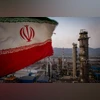 "Iran weighs how to respond to reimposed UN sanctions over nuclear programme")
WebinarsNew
Deep DiveNew
Explore Business Standard
The sanctions again freeze Iranian assets abroad, halt arms deals with Tehran and penalise any development of Iran's ballistic missile programme
Iran weighed Sunday how to respond to reimposed United Nations sanctions over its atomic program, with one lawmaker suggesting parliament would consider potentially withdrawing from the Nuclear Nonproliferation Treaty.
The sanctions again freeze Iranian assets abroad, halt arms deals with Tehran and penalise any development of Iran's ballistic missile programme, among other measures. It came via a mechanism known as snapback, included in Iran's 2015 nuclear deal with world powers, and comes as Iran's economy already is reeling.
Iran's rial currency sits at a record low, increasing pressure on food prices and making daily life that much more challenging. That includes meat, rice and other staples of the Iranian dinner table.
Meanwhile, people worry about a new round of fighting between Iran and Israel, as well as potentially the United States, as missile sites struck during the 12-day war in June now appear to be being rebuilt.
Speaking to the Young Journalists Club, which is affiliated with Iranian state television, lawmaker Ismail Kowsari said Parliament would discuss withdrawing from the nuclear treaty.
Parliament will discuss this issue... and decide on it, he said.
Parliament speaker Mohammad Bagher Qalibaf issued his own warning to those who would honour the UN sanctions as parliament began meeting Sunday.
We announce that if any country wants to take action against Iran based on these illegal resolutions, it will face serious reciprocal action from Iran, and the three European countries that are the initiators of this illegal action will also face our reaction, Qalibaf said without elaborating, according to a report by the state-run IRNA news agency.
Iran considers withdrawing from treaty France, Germany and the United Kingdom triggered snapback over Iran 30 days ago for its further restricting monitoring of its nuclear programme and the deadlock over its negotiations with the US.
Iran further withdrew from the International Atomic Energy Agency monitoring after Israel's war with the country in June, which also saw the US strike nuclear sites in the Islamic Republic.
Meanwhile, the country still maintains a stockpile of uranium enriched up to 60% purity a short, technical step away from weapons-grade levels of 90% that is largely enough to make several atomic bombs, should Tehran choose to rush toward weaponisation.
Iran has long insisted its nuclear programme is peaceful, though the West and IAEA say Tehran had an organised weapons program up until 2003.
The three European nations on Sunday said they continuously made every effort to avoid triggering snapback. But Iran has not authorised IAEA inspectors to regain access to Iran's nuclear sites, nor has it produced and transmitted to the IAEA a report accounting for its stockpile of high-enriched uranium.
The nations also noted Iran enriches uranium at a level that no other peaceful program does.
Asked by the Young Journalists Club if Iran's withdrawal from the treaty meant moving toward building the bomb, Kowsari said: No, it does not mean that. This issue will be reviewed separately later, and we can have it on the agenda if necessary.
Tehran maintains 'snapback' shouldn't have happened Tehran has argued the three European nations shouldn't be allowed to implement snapback, pointing in part to America's unilateral withdrawal from the accord in 2018, during the first term of President Donald Trump's administration.
US Secretary of State Marco Rubio praised the three European nations for an act of decisive global leadership for imposing the sanctions on Iran and said diplomacy is still an option.
For that to happen, Iran must accept direct talks, Rubio said.
However, it remains unclear how Tehran will respond Sunday.
The Trump administration appears to think it has a stronger hand post-strikes, and it can wait for Iran to come back to the table, said Kelsey Davenport, a nuclear expert at the Washington-based Arms Control Association. Given the knowledge Iran has, given the materials that remain in Iran, that's a very dangerous assumption.
Risks also remain for Iran as well, she added.
In the short term, kicking out the IAEA increases the risk of miscalculation. The US or Israel could use the lack of inspections as a pretext for further strikes," Davenport said.
(Only the headline and picture of this report may have been reworked by the Business Standard staff; the rest of the content is auto-generated from a syndicated feed.)
First Published: Sep 28 2025 | 11:53 AM IST


 Connect with us on WhatsApp