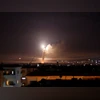
Israel has launched a new wave of large-scale airstrikes and artillery fire against Gaza, reportedly killing over 400 people and injuring hundreds more, according to Palestinian authorities. The casualties include high-ranking Hamas officials and many civilians, including women and children. Hospitals and civil defense teams in Gaza are struggling to manage the overwhelming number of casualties, reported The Guardian.
In addition to the airstrikes, Israel has issued evacuation orders for parts of northern and central Gaza, signaling that a ground invasion may be imminent. This development has forced hundreds, possibly thousands, of Palestinians, many of whom had only recently returned to their homes, to flee once again.
Why the airstrike now?
The Israeli government had been threatening this offensive for weeks. Israeli officials argue that targeting Hamas leadership, which has reasserted control over Gaza in recent weeks, will help secure the release of more hostages. However, many Israeli families of the hostages dispute this claim.
More practically, Israel’s military capabilities have been bolstered since the beginning of the conflict. Ammunition stocks have been replenished — partly due to US deliveries — planes and equipment have been repaired, and troops have had time to rest.
Ceasefire and its breakdown
The current attacks follow the collapse of a ceasefire that had been in place for 16 days after the first phase ended. This ceasefire, agreed upon in January, was supposed to lead to a comprehensive resolution to the conflict, including a full Israeli withdrawal from Gaza and the release of Israeli hostages taken by Hamas during the October 7, 2023, surprise attack. That attack killed 1,200 people, mostly civilians, and sparked the ongoing conflict, which has claimed over 48,700 lives, mostly civilians.
Negotiations to extend the ceasefire have stalled. Israel proposed extending the ceasefire by 30 to 60 days in exchange for the release of more hostages. However, Hamas has rejected this, accusing Israel of violating the terms of the agreement by failing to proceed with the second phase, which would have involved further hostage releases.
Criticism of the Israeli government
Critics of Prime Minister Benjamin Netanyahu suggest that the timing of the new offensive is politically motivated. Some argue that Netanyahu never intended to move to the second phase of the ceasefire, which would have meant withdrawing Israeli forces from Gaza and leaving Hamas in control. In recent weeks, Hamas has reasserted its power, with civilians returning to administrative roles and the military wing seeing a surge in new recruits.
Moreover, Israel’s renewed offensive enjoys full support from the Trump administration, which has backed Israel’s actions against Hamas.
Back home, Netanyahu faces political pressures. He relies on right-wing allies for crucial votes in the Israeli parliament and to maintain his grip on power. These allies have strongly opposed any permanent ceasefire in Gaza, with one resigning in protest at the January ceasefire. Netanyahu, who is on trial for corruption and could face prison if convicted, is also facing growing protests. His supporters now frame these protests as unpatriotic, giving Netanyahu a political boost, at least for the time being.
What’s next in Israel-Hamas conflict?
The two-month pause in hostilities has come to an end. The fresh Israeli offensive is expected to escalate significantly, with Israeli officials indicating that they will continue striking until Hamas releases the remaining 59 Israeli hostages in Gaza, more than half of whom are presumed dead. This would lead to more civilian casualties, mass displacement, and further destruction.
The humanitarian crisis in Gaza, which was temporarily alleviated by a massive influx of aid during the ceasefire, is expected to worsen. While aid agencies have some supplies for the next few weeks, the renewed violence will make distribution much harder, worsening the already dire conditions.
The situation in Gaza remains highly volatile, and it seems unlikely that a resolution to the conflict will be reached anytime soon.
(With agency inputs)

 "Israel intensifies airstrikes on Gaza: What's behind the new offensive?")


 Connect with us on WhatsApp