
Pak's separatist group claims bombing that killed 2 near Karachi airport
The attack by the Baloch Liberation Army outside the airport in the southern port city of Karachi was the latest deadly assault on Chinese in the country
 "Pak's separatist group claims bombing that killed 2 near Karachi airport")
Explore Business Standard

Associate Sponsors
Co-sponsor
The attack by the Baloch Liberation Army outside the airport in the southern port city of Karachi was the latest deadly assault on Chinese in the country
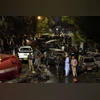
A Pakistani separatist group claimed responsibility for a late night bombing that targeted a convoy with Chinese nationals outside the country's largest airport, killing two workers from China and wounding eight people, officials and the insurgent group said Monday.
The attack by the Baloch Liberation Army outside the airport in the southern port city of Karachi was the latest deadly assault on Chinese in the country and came a week before Pakistan is to host a summit of the Shanghai Cooperation Organization, a security grouping founded by China and Russia to counter Western alliances.
Initially, Pakistani authorities gave conflicting details and indicated the explosion may have been from an oil tanker but police later confirmed it was a bomb attack.
Pakistani news channels broadcast videos of flames engulfing cars and a thick column of smoke rising from the scene. Troops and police cordoned off the area. On Monday, counterterrorism officials were investigating how the attacker reached Karachi, Pakistan's largest city.
Among the wounded were also police officers who were escorting the Chinese convoy when the attack happened.
The spokesman for the separatist group, Junaid Baloch, said Monday that one of their suicide bombers targeted the convoy of Chinese engineers and investors as they left the airport.
The Baloch Liberation Army is mainly based in the restive southwestern Balochistan province but it has also attacked foreigners and security forces in other parts of Pakistan in recent years.
The Chinese Embassy in Islamabad said Chinese staffers working at the Port Qasim Electric Power Company a coal-powered power plant that's a joint China-Pakistan venture were in the convoy when it came under attack around 11 p.m. Two Chinese nationals were killed and one was wounded, the embassy said and added there were also Pakistani casualties but did not elaborate.
Pakistan's Ministry of Foreign Affairs denounced the bombing, saying it was a heinous terrorist attack near Karachi airport. It said another Chinese was injured in the attack.
We extend our deepest condolences and sympathies to the families of the victims, both Chinese and Pakistani, and offer prayers for the swift recovery of the injured, said the ministry in a statement.
We remain resolute in bringing to justice those responsible for this cowardly attack, it added.
Pakistan's Prime Minister Shehbaz Sharif said he was shocked and saddened by the attack. He said the attackers were enemies of Pakistan and promised the perpetrators would be punished.
I strongly condemn this heinous act and offer my heartfelt condolences to the Chinese leadership & the people of China, particularly the families of the victims, he wrote on the social media platform X.
Pakistan stands committed to safeguarding our Chinese friends," he added. "We will leave no stone unturned to ensure their security & well-being.
Pakistan hosts thousands of Chinese workers as part of Beijing's multibillion-dollar Belt and Road Initiative, which is building major infrastructure projects. The outlawed separatist group, which has long waged an insurgency seeking independence for Balochistan, has repeatedly warned against any Chinese working in Balochistan.
The Sunday night attack followed deadly attacks in August that killed more than 50 people in Balochistan. Sharif at the time said the attackers sought to harm Chinese-funded development projects.
The oil- and mineral-rich Balochistan is Pakistan's largest but also least populated province. It is also a hub for the country's ethnic Baloch minority whose members say they face discrimination and exploitation by the central government. That has fueled a separatist insurgency demanding independence. Islamic militants also operate in the province.
In 2018, the BLA stormed the Chinese Consulate in Karachi, triggering an intense hourlong shootout that killed two Pakistani civilians, two police officers. All three assailants were also killed.
In March, in northwestern Pakistan, a suicide bombing killed five Chinese engineers and their Pakistani driver as they headed to the Dasu Dam, the country's biggest hydropower project. In April, five Japanese workers were unharmed when a suicide bomber targeted their van as they were on their wat to a factory in Karachi. One bystander was killed.
First Published: Oct 07 2024 | 7:07 AM IST

