
Mexico awaits Google's reply over Gulf of Mexico name before filing lawsuit
Mexico has argued that the mapping policy violates Mexican sovereignty because the US only has jurisdiction over around 46 per cent of the Gulf
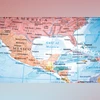 "Mexico awaits Google's reply over Gulf of Mexico name before filing lawsuit")
Explore Business Standard
Mexico has argued that the mapping policy violates Mexican sovereignty because the US only has jurisdiction over around 46 per cent of the Gulf
Mexico said Monday it's awaiting a new response from Google to its request that the tech company fully restore the name Gulf of Mexico to its Google Maps service before filing a lawsuit.
President Claudia Sheinbaum shared a letter addressed to her government from Cris Turner, Google's vice president of government affairs and public policy. It says that Google will not change the policy it outlined after US President Donald Trump declared the body of water the Gulf of America.
We will wait for Google's response and if not, we will proceed to court, Sheinbaum said Monday during a morning press briefing.
As it stands, the gulf appears in Google Maps as Gulf of America within the United States, as Gulf of Mexico within Mexico and Gulf of Mexico (Gulf of America) elsewhere. Turner in his letter said the company was using Gulf of America to follow "longstanding maps policies impartially and consistently across all regions" and that the company was willing to meet in person with the Mexican government.
While international treaties and conventions are not intended to regulate how private mapping providers represent geographic features, it is our consistent policy to consult multiple authoritative sources to provide the most up to date and accurate representation of the world," he wrote.
Mexico has argued that the mapping policy violates Mexican sovereignty because the US only has jurisdiction over around 46 per cent of the Gulf. The rest is controlled by Mexico, which controls 49 per cent and Cuba, which controls around 5 per cent. The name Gulf of Mexico dates back to 1607 and is recognized by the United Nations.
In response to Google's letter, Mexican authorities said they would take legal action, writing that under no circumstance will Mexico accept the renaming of a geographic zone within its own territory and under its jurisdiction".
The renaming of the body of water by Trump has flared tensions between Mexico and the US at a pivotal time for the neighbouring allies.
Sheinbaum has had to walk a fine line with Trump amid threats of tariffs and Mexico and other Latin American countries have braced themselves for promised mass deportations, the brunt of which has still not been felt.
Along with the legal threat to Google, the Mexican president also announced Monday that Mexico and the US would hold high-level meetings this week on trade and security in an effort to maintain a long-term plan of collaboration" between the two countries.
It's the latest round of talks between the two countries in which Mexico hopes to hold off a larger geopolitical crisis.
The renaming of the water body has fuelled strife within the US as well.
Last week, the White House barred Associated Press reporters from several events, including some in the Oval Office, saying it was because of the news agency's policy on the name. The AP is using Gulf of Mexico to ensure that names of geographical features are recognisable around the world but also acknowledging Trump's renaming of it as well.
Other journalistic organisations such as the White House Correspondents' Organisation and the New York Times have echoed the AP in raising alarm about press freedom violations.
First Published: Feb 18 2025 | 12:34 AM IST

