
No sign of mechanical failure; data from crashed Japanese helicopter shows
One of the eight crew members died and a search is continuing for the seven others
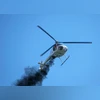 "No sign of mechanical failure; data from crashed Japanese helicopter shows")
WebinarsNew
Deep DiveNew
Explore Business Standard
One of the eight crew members died and a search is continuing for the seven others
An initial analysis of flight data recorders recovered from the crash of two Japanese navy helicopters showed no sign of mechanical problems, Japan's defence minister said on Monday, indicating likely human error.
One of the eight crew members died and a search is continuing for the seven others.
Defence Minister Minoru Kihara said an initial analysis of data from the two flight data recorders on each helicopter showed no abnormality during their flight and that mechanical failure was most likely not the cause of the crash.
The two SH-60K reconnaissance helicopters from the Maritime Self-Defence Force lost contact late Saturday during nighttime anti-submarine training near Torishima island, about 600 kilometers (370 miles) south of Tokyo, officials said.
A crew member who was recovered early Sunday from the water was later pronounced dead. Searches continued on Monday for the seven who were still missing, along with the fuselage of the aircraft.
The seabed at the crash site east of Torishima is about 5.5 kilometers (3.4 miles) deep and the recovery is considered a challenge.
Officials believe the two helicopters likely came too close and collided, Kihara said.
The flight data recorders from the two aircraft were found close together, along with a blade from each helicopter, a number of helmets and fragments believed to be from both aircraft signs the two SH-60Ks crashed almost at the same spot, officials said.
The twin-engine, multi-mission helicopters developed by Sikorsky and known as Seahawks were modified and produced in Japan by Mitsubishi Heavy Industries. Japan has about 70 of the modified Seahawks.
The crash comes as Japan, under its 2022 security strategy, accelerates its military buildup and fortifies its defences on southwestern Japanese islands in the Pacific and East China Sea to counter threats from China's increasingly assertive military.
Japan in recent years has conducted its own extensive naval exercises as well as joint drills with the United States and other partners.
Saturday's nighttime anti-submarine warfare training involved only the Japanese navy, navy chief of staff Ryo Sakai said.
In 2017, a Japanese navy SH-60J, an earlier generation Seahawk, crashed during nighttime training due to human error, killing three crew. In July 2021, two SH-60s had a minor collision off the southern island of Amami Oshima, with both suffering blade damage, but causing no injuries.
Following the 2021 collision, the navy introduced a set of measures aimed at ensuring enough distance between aircraft. Sakai said Saturday's crash could have been prevented if all safety measures had been adequately followed.
In the US, the fatal crash of a MH-60S Seahawk during training off the coast of California in 2021 was attributed to mechanical failure from unsuspected damage during maintenance, according to the US Navy.
(Only the headline and picture of this report may have been reworked by the Business Standard staff; the rest of the content is auto-generated from a syndicated feed.)
First Published: Apr 22 2024 | 12:43 PM IST


 Connect with us on WhatsApp