
Over 850 trekkers and guides rescued after Mount Everest blizzard
Thousands of holidaymakers had flocked to Tibet during the eight-day holiday in China from October 1 to celebrate the National Day and Mid-Autumn Festival
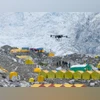 "Over 850 trekkers and guides rescued after Mount Everest blizzard")
Explore Business Standard
Thousands of holidaymakers had flocked to Tibet during the eight-day holiday in China from October 1 to celebrate the National Day and Mid-Autumn Festival
Over 850 hikers, guides and porters who were stranded for three days in a severe blizzard on the Tibetan slopes of Mount Everest have been evacuated by hundreds of villagers and rescue teams, according to Chinese official media.
All the hikers and local service personnel trapped by heavy snowfall in Dingri County at Xigaze City in southwest Tibet Autonomous Region have reached safety, the local government said late Tuesday night.
A total of 580 hikers and over 300 personnel, including local guides and yak herders, have safely reached Qudeng Township and nearby areas, where officials are arranging their return journeys, the state-run Xinhua news agency reported.
Xinhua had earlier reported on Monday that one hiker was killed in the snowstorm, which caught more than 1,000 holiday trekkers off guard on the Tibetan side of Mount Everest.
Thousands of holidaymakers had flocked to Tibet during the eight-day holiday in China from October 1 to celebrate the National Day and Mid-Autumn Festival.
The blizzard, which began on Saturday, brought heavy snow that crushed tents and buried trails, making descent extremely difficult for the hikers, most of whom were Chinese nationals.
News of the rescue efforts reached the mainland slowly due to the remoteness of the area, causing anxiety among the relatives of the stranded trekkers.
State-run broadcaster CCTV reported on Wednesday that a dozen more hikers, assisted by rescue personnel from Tingri county, had reached a rendezvous point on their descent.
On Sunday, Shigatse city officials announced on the social media platform, Weibo, that Tingri county authorities had mobilised teams to contact and help stranded trekkers at the base camp to ensure their safety.
October, typically known for mild temperatures and clear skies, is considered the peak climbing season for Mount Everest and the surrounding regions. However, the sudden blizzard caught even experienced mountaineers off guard, local media said.
The National Business Daily quoted climbers as saying the blizzard began on Friday evening and continued through Saturday.
According to the media outlet based in the southwestern city of Chengdu, climbers' tents were crushed and snow accumulated to a depth of over a metre at the base camp, cutting off all descent routes.
The trekkers' camps were in the remote Gama Valley, which is home to the largest and one of the best-preserved primeval forests in the Everest area, located between Tingri and Dinggye counties.
The route to the eastern side of Mount Everest from Gama Valley involves a 40-km trek and relies solely on yaks and mules for supplies, taking about 10 days for a round trip.
While the northern slope of Everest, accessible by road, is the more popular hiking route, another commercial route lies on the southern slope in Nepal.
Extreme weather has also battered Nepal since last week, with 60 people killed in landslides and flash floods triggered by torrential rain, disrupting roads and collapsing bridges.
(Only the headline and picture of this report may have been reworked by the Business Standard staff; the rest of the content is auto-generated from a syndicated feed.)
First Published: Oct 08 2025 | 7:10 PM IST


