
Pakistan Cabinet approves National Adaptation Plan to combat climate change
National Adaptation Plans are widely seen as one of the most important mechanisms for adapting to climate change
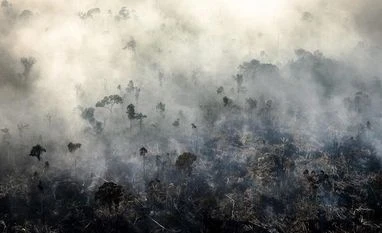 "Pakistan Cabinet approves National Adaptation Plan to combat climate change")
WebinarsNew
Deep DiveNew
Explore Business Standard
National Adaptation Plans are widely seen as one of the most important mechanisms for adapting to climate change
Pakistan's Cabinet on Wednesday approved the National Adaptation Plan for building resilience to climate change, which Prime Minister Shehbaz Sharif described as a national security issue after the last year's catastrophic floods.
National Adaptation Plans are widely seen as one of the most important mechanisms for adapting to climate change.
They aim to reduce vulnerabilities to climate impacts by creating comprehensive medium and long-term plans, including the integration of adaptation measures into national policy.
"Climate change is redefining every human experience on the planet, especially in Pakistan. In the long journey to build resilience, our government is proud to pass our country's National Adaptation Plan, which will give Pakistan the essential tools to adapt to the risks of climate stress," Sharif tweeted.
"As the last year's devastating floods showed, climate change is a development, economic, human and national security issue critical to the future of our people," he said.
The last year's floods triggered by unprecedented monsoon rains killed at least 1,739 people and affected over 33 million in Pakistan while leaving many at the mercy of international donors.
At one time, one-third of Pakistan's territory was under water. The floods caused the country a loss of about USD 30 billion.
"All the more reason to invest in climate adaptation to build our core capacities to fully cope with the challenge. I appreciate Minister for Climate Change Sherry Rehman, her team & other stakeholders for excellent work," Sharif said.
"Thank you to all cabinet colleagues and Prime Minister @CMShehbaz for approving Pakistan's National Adaptation Plan 2023 today in the federal cabinet. Great service to Pakistan as it faces adaptation and resilience challenges," Minister of Climate Change Sherry Rehman tweeted.
Pakistan began the process of creating a National Adaptation Plan for building resilience to climate change in 2021, the UN Environment Programme (UNEP) said in a press release in 2021.
The project is supported by the UNEP and funded by the Green Climate Fund with USD 2.7 million, it had said.
Pakistan is highly vulnerable to climate change impacts, stemming from its dependency on climate-sensitive sectors, such as agriculture, water, and natural resources.
Meanwhile, at least 15 persons have been killed and 14 others injured in rain-related incidents in Pakistan's Khyber Pakhtunkhwa province during the last four days.
About 83 houses were partially damaged and 12 completely destroyed as relief activities continued in the districts affected by rains, landslides and floods, the Daily Times newspaper quoted Provincial Disaster Management Authority (PDMA) as saying on Tuesday.
(Only the headline and picture of this report may have been reworked by the Business Standard staff; the rest of the content is auto-generated from a syndicated feed.)
First Published: Jul 26 2023 | 2:50 PM IST

