Home / World News / South Korea's Yoon appears in court for hearing on possible arrest warrant
South Korea's Yoon appears in court for hearing on possible arrest warrant
Yoon, who was ousted in April after the Constitutional Court upheld his impeachment, was released from prison in March after the Seoul Central District Court overturned his January arrest
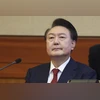
Yoon's lawyers issued a statement denouncing the request for his arrest as excessive and lacking evidence. (File Photo: PTI)
3 min read Last Updated : Jul 09 2025 | 12:22 PM IST
Disgraced former South Korean President Yoon Suk Yeol arrived in court Wednesday for a hearing to review a special prosecutor's request for his arrest on charges related to his brief imposition of martial law in December.
Yoon, who was ousted in April after the Constitutional Court upheld his impeachment, was released from prison in March after the Seoul Central District Court overturned his January arrest, allowing him to stand trial for rebellion without being detained.
Arriving in a black van with his lawyers, Yoon did not respond to questions before entering the court in Seoul.
His criminal case is being handled by a team of investigators under a special prosecutor, Cho Eun-suk, who are pursuing additional charges over Yoon's authoritarian push, including abuse of power, falsifying official documents and obstructing official duties.
Cho's team said they view Yoon as a potential threat to destroy evidence. They questioned him twice before submitting a request for his arrest warrant to the court on Sunday.
Yoon's lawyers issued a statement denouncing the request for his arrest as excessive and lacking evidence. The court is expected to decide on the arrest warrant by Wednesday evening or early Thursday.
The former conservative leader described his martial law imposition on December 3 as a necessary step to quash his anti-state liberal opponents, accusing them of using their legislative majority to obstruct his agenda. But Yoon's decree lasted only hours, after a quorum of lawmakers broke through a blockade of heavily armed soldiers at the National Assembly and voted to lift the measure.
Yoon was impeached by lawmakers December 14 and indicted January 26 by public prosecutors who accused him of masterminding an attempted rebellion, describing his power grab as an illegal attempt to seize the legislature and election offices and detain political opponents. The charges are punishable by the death penalty or life imprisonment.
Yoon also faces accusations of enforcing martial law without following required legal procedure, such as deliberation by a formal Cabinet meeting, and of unlawfully deploying the presidential security forces like a private army to block an initial attempt by law enforcement to detain him at his residence in early January.
Yoon's liberal rival, Lee Jae Myung, who won the June snap election to replace him, last month approved legislation to launch sweeping special investigations into Yoon's martial law debacle and other criminal allegations involving his wife and administration.
(Only the headline and picture of this report may have been reworked by the Business Standard staff; the rest of the content is auto-generated from a syndicated feed.)


 "South Korea's Yoon appears in court for hearing on possible arrest warrant")

