
SpaceX rocket fails, leaves Starlink's internet satellites in wrong orbit
The last launch failure occurred in 2015 during a space station cargo run. Another rocket exploded the following year during testing on the ground
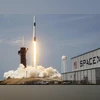 "SpaceX rocket fails, leaves Starlink's internet satellites in wrong orbit")
WebinarsNew
Deep DiveNew
Explore Business Standard
The last launch failure occurred in 2015 during a space station cargo run. Another rocket exploded the following year during testing on the ground
A SpaceX rocket has failed for the first time in nearly a decade, leaving the company's internet satellites in an orbit so low that they're doomed to fall through the atmosphere and burn up.
The Falcon 9 rocket blasted off from California on Thursday night, carrying 20 Starlink satellites. Several minutes into the flight, the upper stage engine malfunctioned. SpaceX on Friday blamed a liquid oxygen leak.
The company said flight controllers managed to make contact with half of the satellites and attempted to boost them to a higher orbit using onboard ion thrusters. But with the low end of their orbit only 84 miles (135 kilometres) above Earth less than half what was intended our maximum available thrust is unlikely to be enough to successfully raise the satellites, the company said via X.
SpaceX said the satellites will reenter the atmosphere and burn up. There was no mention of when they might come down. More than 6,000 orbiting Starlinks currently provide internet service to customers in some of the most remote corners of the world.
The Federal Aviation Administration said the problem must be fixed before Falcon rockets can fly again.
It was not known if or how the accident might impact SpaceX's upcoming crew flights. A billionaire's spaceflight is scheduled for July 31 from Florida with plans for the first private spacewalk, followed in mid-August by an astronaut flight to the International Space Station for NASA.
The tech entrepreneur who will lead the private flight, Jared Isaacman, said Friday that SpaceX's Falcon 9 has an incredible track record" and as well as an emergency escape system.
The last launch failure occurred in 2015 during a space station cargo run. Another rocket exploded the following year during testing on the ground.
SpaceX's Elon Musk said the high flight rate will make it easier to identify and correct the problem.
(Only the headline and picture of this report may have been reworked by the Business Standard staff; the rest of the content is auto-generated from a syndicated feed.)
First Published: Jul 13 2024 | 7:25 AM IST


 Connect with us on WhatsApp