By Alicia A. Caldwell, Hadriana Lowenkron, María Paula Mijares Torres and Magan Crane
The Trump administration is seeking to scale down the number of federal officers in Minneapolis after the killing of two US citizens during immigration raids sparked a nationwide uproar and weeks of protests.
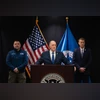
Tom Homan, the administration’s “border czar,” said Thursday at a press conference in Minneapolis that officials from Customs and Border Protection and Immigration and Customs Enforcement are working on a “draw down plan” that hinges on cooperation from local, state and federal officials.
“When we have these agreements, it takes less law enforcement agents to do the job,” he told reporters. “They’re here to help us, and the draw down will come soon.”
Separately, Republican Senator Susan Collins of Maine announced early Thursday that ICE had stopped “enhanced operations” in her state, which like Minnesota has a sizable Somali community.
“There are currently no ongoing or planned large-scale ICE operations here,” Collins said.
President Donald Trump in remarks later Thursday, praised Homan, saying he doing a “great” job.
“We’ll do whatever we can to keep our country safe,” Trump told reporters. But when asked if he was pulling back from Minnesota, the president responded “No, not at all.”
Republican Pushback
Trump deployed Homan to Minneapolis earlier this week in a shakeup that saw Greg Bovino, the US Border Patrol commander who had become the face of the latest operation, leave the city. The restructuring came after widespread backlash — including from Republican lawmakers — to the killing of 37-year-old intensive care nurse Alex Pretti in a confrontation with federal officers, which came just days after the shooting of another US citizen, 37-year-old Renee Good.
At the press conference, Homan hailed conversations he had with state and local officials including Governor Tim Walz, Minneapolis Mayor Jacob Frey and state Attorney General Keith Ellison, saying they had agreed on the need to allow ICE to operate within “the safety and security of a jail.”
“More agents in the jail means less agents in the street. This is common sense cooperation that allows to draw down on the number of people we have here,” Homan said.
Homan also reiterated the administration’s plans to engage in “targeted” enforcement operations, conceding that some of the operations that have taken place “I think, got away from it a little bit.”
“The prioritization are going to be criminal aliens, public safety threats, and national security threats,” Homan said, before adding: “if you’re in the country illegally, you’re never off the table.”
Maine Operation
Collins said she had urged Homeland Security Secretary Kristi Noem to stop enhanced enforcement in her state. She didn’t say what operations that referred to, but DHS had earlier announced “Operation Catch of the Day” in Maine to target what it said were “criminal illegal aliens who have terrorized communities.”
Collins said ICE and CBP “will continue their normal operations that have been ongoing here for many years.”
A dialing back of ICE’s enhanced enforcement in Maine “does not end the pain and suffering that they have inflicted on communities across our state,” Governor Janet Mills said in a statement. Mills, a Democrat, is challenging Collins for her Senate seat this year. She repeated calls to remove Noem from her cabinet position and for Congress to reject DHS funding until there are tighter restrictions on ICE’s tactics.
“Until there are substantive measures and changes in place, no state – including Maine – is protected from the weaponization of federal law enforcement agencies against its own citizens by the Trump Administration,” Mills said.

 "Trump admin plans to dial back ICE agents in Minnesota after protests")


 Connect with us on WhatsApp