Chinese President Xi Jinping is reviving his long-standing ambition to build a “strong currency” that can rival the US dollar, as global markets question the dollar’s dominance and financial risks rise globally.
China is planning to build a “strong currency” that can become widely used in international trade, investment and foreign exchange markets, and reach the status of a global reserve, South China Morning Post reported.
The goal was highlighted in excerpts from a 2024 speech by Xi, published on Saturday by Qiushi, the ruling Communist Party’s top theoretical journal. Xi made the remarks while addressing provincial and ministerial officials on China’s plan to turn itself into a global financial powerhouse.
Why is the timing significant now?
Parts of Xi’s speeches are often republished to underline long-term national priorities. This time, the focus on currency strength comes as global financial markets face volatility and confidence in the US dollar shows signs of strain.
Xi has repeatedly stressed in earlier speeches that China must reduce reliance on foreign currencies and raise the yuan’s global standing as part of broader financial reform.
What exactly did Xi Jinping say?
Xi had promised to cut financial risks and make China’s currency stronger and more accepted around the world. This has increased expectations that China will speed up efforts to promote the yuan globally.
“What constitutes a strong financial nation?” Xi had said. “First, it should have a powerful currency, widely used in international trade, investment, and foreign exchange markets, holding the status of a global reserve currency.”
These comments came from a speech Xi made in 2024 and were published on Saturday by the Qiushi magazine, Bloomberg reported.
Xi said China’s financial system has become more complex, with risks now more closely linked to each other. Because of this, preventing risks has become “an eternal theme”.
“If finance becomes preoccupied with self-circulation and self-expansion, it will become water without a source or a tree without roots, inevitably leading to a crisis,” Xi said.
He also highlighted the need for a strong central bank and efficient financial institutions that can handle risks well.
The excerpts listed what Xi described as the key features of a financial powerhouse — “a strong economic foundation”, global leadership in technology and industry, and a currency that is widely used and trusted across the world.
He said a strong financial system also needs an effective central bank, a sound monetary policy, strong risk control, globally competitive financial institutions and international financial centres with pricing power.
Xi also said that while China is already among the world’s largest economies in terms of banking assets, foreign exchange reserves and capital markets, it is still “big but not strong”. He added that building a truly strong financial system would take time, South China Morning Post reported.
How global is the yuan today?
Beijing has been pushing yuan internationalisation for over a decade, and the currency is now used more widely in China’s trade settlements. But its global reach remains limited.
China’s Cross-Border Interbank Payment System clears about 700 billion yuan, or around $100 billion, daily — far below the nearly $2 trillion handled each day by the dollar-based Clearing House Interbank Payments System, the report said.
Yuan-denominated debt accounts for just 0.8 per cent of the global market.
Despite trade tensions with the US, the yuan has stayed firm over the past year. This contrasts with the sharp depreciation seen during Donald Trump’s first term, when markets speculated Beijing allowed the currency to weaken to offset tariffs.
Even so, many analysts say the yuan remains undervalued. Goldman Sachs analysts said in a January 5 report that the currency could be trading about 25 per cent below its fair value against the dollar, the report said.
How did markets react?
The onshore yuan rose 0.1 per cent against the dollar on Monday after the publication, taking its year-to-date gain to 0.5 per cent, Bloomberg reported.

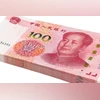 "Xi Jinping revives push to make China's yuan a global reserve currency")


