


Click Here: A timely reminder that marketing fundamentals are not outdated
In the ever-changing digital world, Click Here offers a refresher course that should be again and again to stay up to speed on the subject
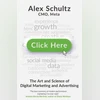 "Click Here")
premium
Click Here: The Art & Science of Digital Marketing and Advertising
5 min read Last Updated : Dec 30 2025 | 10:31 PM IST
Listen to This Article
Click Here: The Art & Science of Digital Marketing and Advertising
By Alex Schultz
Published by Hachette
400 pages ₹699
I belong to the era of television and print advertising. I cut my teeth doing media planning on television and print, using the National Readership Survey data. To stay on the curve, if not ahead, I enrolled for an online digital marketing course almost a decade ago. I learnt a lot through that course so that I could ask my brand coaching clients the right questions. But the world of digital media is constantly changing. Reading Click Here was a good refresher and also got me up to date on the subject.
The author is Alex Schultz, the chief marketing officer of Meta (owner of Facebook, Instagram and WhatsApp). His book comes with some heavy praise (“Alex is one of the small handful of people that I can say without his work our community would not have connected more than 2 billion people around the world,” wrote Meta CEO Mark Zuckerberg).
The three foundational pillars of marketing are Segmentation, Targeting and Positioning (STP). It was good to see that Alex has not dismissed them as old wives’ tales. We find STP appearing often in the book.
The book has four sections. The first, titled “The Basics”, covers the key role of digital marketing/advertising. Mr Schultz starts by asking, “What is the North Star?” and “What is the Marketing Funnel?” For Facebook, the North Star was “Connect the World Online”. And the metric for Facebook was monthly active users (MAU); a consumer was considered “monthly active” if she logged into the service at least once in the last 30 days. We are then taken back to the AIDA (Attention, Interest, Desire and Action) model that all of us learnt in B-School. How do you measure conversions? Is it just acquisitions or is it a combination of new acquisitions, churned users and resurrected users?
In Targeting, we are introduced to behavioural targeting and demographic targeting. In the TV and print era we only had demographic targeting, but with digital media we can do behavioural targeting. Concepts such as retargeting, un-targeting and data quality are explained. Which creative will work better and result in a click? We learn about the four new Ps of creative: Prominent, personalised, persistent and performant. We are reminded of David Ogilvy’s words: “If it doesn’t sell it is not creative.”
The second section of the book is on infrastructure. Digital marketing is all about the art of measurement. Goodhart’s Law says that any observed statistical regularity will tend to collapse once pressure is placed upon it for control purposes. Digital marketing is all about metrics, measurement and experiments. The author quotes Javier Olivan: “In theory, theory and practice are the same; in practice, they are different.” The importance of return on investment and measuring comprises a full chapter. How do you build a digital marketing organisation? Hire the right kind of people and the right kind of agency partners. Not everything can be done internally and Mr Schultz stresses the importance of having good agency partners.
The third section is dedicated to the many channels that a digital marketer needs to use. The first set of channels are product-led channels. Then there are partner-led channels. These need to be treated differently. Then there is search. Search consists of search engine optimisation (SEO) and search engine marketing (SEM). The author spends time explaining the importance of selecting keywords and search terms. How to evaluate the supply of these and bidding for them? Should you bid on your own name? Conventional wisdom is that you better do so since your competitor may be bidding for them. But in the book the advice is not so straightforward, but I will leave you to find out more. Given the fact the author is from social media, I thought social channels would account for the lion’s share of the book. But his coverage of social channels is quite muted.
The last section of the book is a summing up of the first three sections with some questions about artificial intelligence (AI) and how it will shape the future of digital marketing. I particularly liked the quote attributed to Benedict Evans: “If the internal combustion engine gives humanity access to infinite horses (horse power), then AI gives us access to infinite interns.” Here are some sane words from the author: The basics matter (STP), be clear about your goal and metrics (don’t confuse the two), own that outcome, a little technical skill can go a long way, good marketing cannot fix a bad product (why is this so difficult to understand) and direct response marketing is a game of inches (or a thousand cuts).
It was gratifying to see a modern-day marketer refer to all-time classics such as Scientific Advertising (Claude C Hopkins), Ogilvy on Advertising, Profile of Future (Arthur C Clarke), Scoring Points (Clive Humby) and Reality in Advertising (Rosser Reeves).Read Click Here cover to cover. Read it again and make notes…. I certainly plan to do that.
The reviewer is a best-selling author. His latest book Marketing Mixology is about four essential skills for marketing success