Moreover, there may have been a structural shift post-pandemic in demand for oil since work-from-home has cut transportation needs alongside increasing electric vehicle or EV penetration.
India’s upstream players, ONGC and Oil India are down 18 per cent and 32 per cent respectively over the past 12 months, and valuations imply crude will trend well below long term average. Compared to global peers, Indian upstream players trade at a steep discount with investors cautious about policy specifics like regulated pricing (administered price mechanism or APM gas prices and windfall taxes in the past), as well as weak production growth.
Both companies are now entering a growth phase however. ONGC will gain via KG Basin, Daman, DSF, and the BP-TSP partnership while Oil India can drive a gas ramp-up via pipeline expansions and NRL’s capacity expansion. Rising New Well Gas (NWG) allocation where higher prices may be charged strengthens the outlook, particularly for Oil India.
Given higher production and cheap valuations, the stocks could bounce from these levels. ONGC and Oil India are among the cheapest globally. On first half of financial year 2028 (H1FY28) enterprise value to operating profit basis (adjusted for investments), they trade at between 2.9 times-3.6 times versus global average of 4.2 times. On reserves, the gap is clearer, enterprise value per barrel is seen at $6.0 (ONGC) and $5.4 (OIL), which is half the global average of $11.9. Cash flow is acceptable at $29.4/bbl (ONGC) and $22.6 (OIL) per bbl with operating profit broadly in line with global flows.
Given the NWG factor, the discount on account of capped APM realisations may change. Policy reforms such as APM gas price liberalisation, premium-priced NWG, windfall tax removal, opening new exploration areas, among others makes a reasonable case for re-rating.
Equating current share prices to likely discounted cash flows, the market seems overtly pessimistic. Discounted cash flow models imply these valuations justify crude realisations at between $45-55/barrel, which is well below the long-term averages of $65/bbl.
ONGC’s near-term growth levers include the KG Basin ramp-up (45 kbpd oil, 9-10 mmscmd gas peak by FY27), Daman (5 mmscmd by FY27), DSF-II (4 mmscmd from FY28), and potential BP-TSP upside which cannot be estimated yet. Oil India’s growth levers are anchored by a larger drilling programme and addressing gas transportation bottlenecks with the DNPL capacity doubling to 2.5 mmscmd (end-2025), and IGGL’s grid rollout by FY27 with NRL’s refinery expansion (end-CY25) addressing demand constraints.
For ONGC, NWG share of gas production rose from 13 per cent FY26 to 27 per cent FY28, adding an estimated ₹ 2,600 crore to operating profit by FY28 (about 3.5 per cent of FY25 operating profit). Oil India sees negligible NWG benefits today. Post-NRL expansion and Northeast grid rollout, NWG share could however exceed 50 per cent of gas by FY28, driving ₹1,300 crore of operating profit (14 per cent of FY25 operating profit). This suggests the share valuations are hitting a point of maximum pessimism.
It is, however, likely that crude will continue to ease downwards to test $60/bbl in the near term, thanks to the OPEC production ramp up and demand growth could take a long time, given the slow global economy.
However, given the valuations and the production growth assumptions, both stocks are worth a second look for the long-term investor. ONGC’s growth and NWG premiumisation kicks in earlier but OIL will eventually see a larger share of NWG in its gas mix.


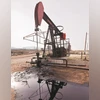 "ONGC, crude oil")