


TTK, PSG Institute, two US universities to collaborate for heart valves
Four organisations will work for the project, which is funded through a grant from National Institutes of Health (NIH) and aims to develop low cost prosthetic heart valves for India
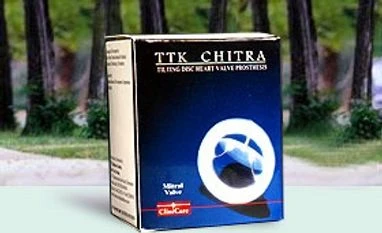 "TTK Chitra Heart Valve Prosthesis")
TTK Chitra Heart Valve Prosthesis
TTK Healthcare Ltd will partner with PSG Institute of Medical Sciences and Research (PSG IMSR), Coimbatore, Colorado State University (CSU) and The Ohio State University (OSU), to develop low cost prosthetic heart valves for India. The project is funded through a grant from National Institutes of Health (NIH).
The research partners aims to develop low-cost replacement heart valves that promise to be superior to current mechanical and tissue-based heart valves and reduce patients need for medication to prevent blood clots.
As industry partner, TTK Healthcare will commercialise technology on the replacement valves, when it is developed. The consortium is supported by a two year joint grant from the National Institutes of Health (NIH) in US and Department of Biotechnology in India.
Also Read

Dr Chandrasekar (Chandra) from CSU will lead the management of this international collaboration that will work on developing a novel heart valves made from plastic materials to address the problems associated with rheumatic heart valve disease, which is the most common form of valve disease in developing nations.
While patients who receive mechanical heart valves must remain on lifelong medication to prevent blood clotting, the bio-prosthestic valves, usually made from animal tissue, are prone to hardening over time and do not last more than 10-15 years, which is not suitable for young patients with rheumatic valve disease for various reasons, said Principal Investigator Lakshmi Prasad Dasi. The artificial heart valves to be developed in this project will be made from flexible plastic materials containing hyaluronan, a molecule found throughout the body and in the natural heart valve tissues.
The entire pre-clinical trials will take place in India with involvement from TTK Healthcare, the manufacturer of the TTK Chitra Heart Valve.
"If successful, TTK Healthcare Ltd will seriously consider investing in commercialisation of the technology," said in the release.
In addition to implantable low-cost heart valves, the team hopes their innovative strategy can be translated and engineered as a trans-catheter heart valves, thereby eliminating the need for open heart surgery.
Don't miss the most important news and views of the day. Get them on our Telegram channel
First Published: Oct 03 2015 | 12:44 PM IST