Crude oil, part of the category of petroleum and oil lubricants (POL), accounts for nearly a fourth of cargo volumes at non-major ports, which are mostly owned by private players or state governments.
According to the ministry’s data till December, cargo at these ports grew by merely 2.4 per cent to 563 million tonnes (mt), which, if sustained through this financial year, would mean the slowest growth rate for private ports since the pandemic.
POL at non-major ports declined 0.6 per cent in April-December.
This is at a time when major ports (owned by the central government) have recorded a near 9 per cent growth rate to 672 mt in FY26. This divergence has been driven largely by the cargo-mix concentration and regional demand patterns, say experts.
Overseas cargo traffic at major ports grew 8 per cent while coastal traffic expanded 8.6 per cent during the period, reflecting recovery in industrial demand and increased coastal movement.
Major ports such as Deendayal, Paradip, and Visakhapatnam have benefited from strong throughput in bulk and liquid cargo segments, including crude oil, petroleum products, liquefied petroleum gas/liquefied natural gas, coking coal, fertilisers, cement, and containers, said Jagannarayan Padmanabhan, Senior Director & Global Head, Consulting, Crisil Intelligence.
In contrast, non-major ports — particularly in Gujarat and Odisha, which together account for nearly 73 per cent of non-major port cargo — have faced headwinds. Gujarat’s non-major ports in FY26 to date saw largely stagnant volumes while Odisha’s non-major ports are expected to record a contraction of 1.5 per cent.
“This was primarily due to a decline in POL imports at ports of the Gujarat Maritime Board, coupled with lower iron-ore outward movement (both exports and coastal) from Odisha. As a result, growth at non-major ports remained subdued despite positive coastal trends,” said Padmanabhan.
Facing pressure from America, India has cut oil imports from Russia.
Major oil players such as Reliance Industries Ltd (RIL) have significantly reduced their import of crude oil from Russia. RIL, which is India’s largest buyer of Russian oil, slashed purchases by almost 50 per cent in December, said the Centre for Research on Energy and Clean Air, a European think tank.
POL and crude oil at non-major ports is following an unstable trajectory this year on a month-on-month basis (see chart).
State-run refiners, including Indian Oil, Bharat Petroleum, and Hindustan Petroleum, have also scaled back purchases from Russia. In December, India’s crude oil imports from Russia hit a three-year low as purchases declined to 1.14 million barrels per day.
The trend reportedly continued in January for private players, but public-sector firms increased their buying this month.
Crude oil at major ports, in the first nine months this financial year, increased by 8 per cent to 134 million tonnes, the data shows. Padmanabhan said that state-owned ports benefited as public-sector undertakings continued to import crude oil through major ports between April and December, even among changing market preferences.


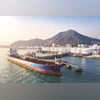 "Ports, shipping, crude oil, oil supply")