The development comes as the Army seeks to strengthen its multi-domain operations (MDO) capabilities — the coordinated employment of military capabilities across land, space, cyberspace and the electromagnetic spectrum — and to incorporate lessons drawn from the clashes with Pakistan in May last year during Operation Sindoor.
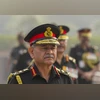
“A large number of government sanction letters for organisational change have been approved over the past 14 to 15 months, numbering 31, including that of the path-breaking IBG-isation of a corps and the raising of aviation brigades,” General Dwivedi said in his address during the annual presser ahead of Army Day.
This follows organisational changes undertaken by the Army over the past year, including the raising of new frontline formations such as the ‘Rudra’ all-arms brigades, ‘Bhairav’ light commando battalions, and ‘Shaktibaan’ artillery regiments, aimed at enhancing the Army’s ability to conduct high-tempo operations, improve agility and disruptive effect, and extend its offensive reach and real-time targeting capabilities.
Defence sources told Business Standard that four IBGs will be raised initially, with the focus on the Army’s strike corps. Explaining that the IBG concept has already been tested multiple times in the field and remains an ongoing process, the sources said the four formations are expected to materialise over the next one to one-and-a-half years.
The IBG concept has been debated within the Army for nearly two decades. In recent years, it gained renewed traction after China raised its combined arms brigades in 2017. An IBG is envisaged as a formation of roughly 3,000 to 4,000 soldiers, configured as a combined force comprising infantry, tanks, artillery, air defence, signals, engineers and other supporting units. At present, at least a few IBG formations exist, but these are widely considered to be IBGs largely in name rather than in full operational form.
On the western border, General Dwivedi also said that at least eight terrorist camps are active in Pakistan, with two located along the International Border and six along the Line of Control.
With regard to the northern borders, he said the situation remained stable but required continued vigilance, adding that the Army’s deployment along the Line of Actual Control (LAC) remains balanced and robust.


 "Upendra Dwivedi, Upendra, Dwivedi")