


India, Oman to explore local currency trade; discuss defence cooperation
The Omani side expressed interest in discussing air service traffic rights, including the number of destinations and code-sharing provisions
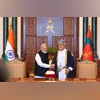 "Modi, Oman")
The two sides noted the deepening cooperation in the defence sector and healthcare | PHOTO: X @narendramodi


Listen to This Article
Apart from signing a free-trade agreement, India and Oman on Thursday discussed exploring mechanisms to facilitate bilateral trade in local currencies, and reviewed the progress in the negotiations on their Bilateral Investment Treaty (BIT).
The two sides signed seven agreements, which included adopting a ‘joint vision document on maritime cooperation’ that reflected their shared commitment to regional maritime security, a joint statement issued after Prime Minister Narendra Modi concluded his two-day visit to Oman, stated. Oman was the final-leg of the PM’s three-nation foreign visit. He also visited Jordan and Ethiopia.
The PM landed in Muscat, the capital of Oman, on Wednesday. He discussed bilateral relations with the Sultan of Oman, Haitham bin Tarik, on Thursday. Their discussion spanned bilateral ties in trade, investment, defence, security, technology, education, energy, space, agriculture, culture and people-to -people ties.
The two delegations said, given its “past successful track record”, the Oman-India Joint Investment Fund (OIJIF) held “strong potential to promote and facilitate investments”. The two sides said there is immense potential to promote trade in textiles, automobiles, chemicals, equipment, and fertilisers.
Both sides discussed ways to further enhance their bilateral partnership in the energy sector, including collaboration in Indian as well as global exploration and production (E&P) opportunities, new and renewable energy cooperation in the areas of green ammonia, and green hydrogen.
Also Read

 "Piyush Goyal, Oman")
 "Modi, Narendra Modi")
 "Modi, Narendra Modi")
 "Modi, Narendra Modi")
 "PM Modi")
The two sides noted the deepening cooperation in the defence sector, and health care. An agreement on cooperation in agriculture and allied sectors was also signed.
The Omani side expressed interest to discuss air service traffic rights, including on the number of destinations and code-sharing provisions. The Indian side took note of the request, the joint statement said.
Officials pointed out that the India-Oman Comprehensive Economic Partnership Agreement will boost Indian exports of its agricultural and processed food items, like natural honey, cashew, potatoes, boneless meat, and bakery products. India will provide zero-duty access to 2,000 tonnes of dates from Oman every year, and give duty waivers to Gum Arabica (used in food, medicines and cosmetics) and Frankincense (used in the incense and perfume sector) from Oman. Oman imports animal products worth about $ 1.5 billion and processed food products worth nearly $ 1.3 billion every year.
More From This Section
 "China-Taiwan")
 "India-Saudi Arabia flag")
 "PM Narendra Modi (left) with Ethiopian counterpart Abiy Ahmed at the Ethiopian Parliament in Addis Ababa. Pic: X/@NARENDRAMODI")
 "Pakistan extends airspace ban on India")
 "Modi, Narendra Modi, Abiy Ahmed Ali, Abiy Ahmed")
Don't miss the most important news and views of the day. Get them on our Telegram channel
First Published: Dec 18 2025 | 8:08 PM IST