


Home / External Affairs Defence Security / News / Trying to increase trust with China: Army chief General Upendra Dwivedi
Trying to increase trust with China: Army chief General Upendra Dwivedi
General Upendra Dwivedi's annual news conference highlights India's approach
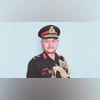 "Army chief General Upendra Dwivedi addressed the annual news conference in New Delhi on Tuesday")
premium
Army chief General Upendra Dwivedi addressed the annual news conference in New Delhi on Tuesday
4 min read Last Updated : Jan 13 2026 | 11:52 PM IST
Listen to This Article
Army chief General Upendra Dwivedi said on Tuesday that the country’s northern borders, while stable now, require vigilance.
“The situation on the northern front remains stable but needs constant vigil,” Dwivedi said at an annual news conference in New Delhi, ahead of Army Day (on Thursday).
He said interactions between the Indian and Chinese armies, from junior to senior ranks, as well as confidence-building measures at the diplomatic level, were all contributing to the gradual normalisation of activities such as patrolling and grazing along the Line of Actual Control (LAC).
Army patrolling and grazing by herders along the LAC, the de facto border between India and China, were interrupted until recent months after a violent clash in the Galwan River
valley in 2020, when 24 soldiers from both sides were killed.
Thousands of troops from India and China had amassed at the border in the aftermath.
“Our (the Indian Army’s) deployment along the LAC remains balanced and robust,” Dwivedi said, without specifying how many Indian (or Chinese) soldiers remain in their posts.
A meeting between Prime Minister Narendra Modi and Chinese President Xi Jinping on the sidelines of a BRICS summit in Russia in October 2024 led to disengagement at the LAC.
Modi also met Xi at the Shanghai Cooperation Organisation summit in China last year. But the status of “de-induction” is unclear.
When asked about the drawdown of troops, Dwivedi said bilateral meetings such as those between the special representatives (India’s National Security Advisor and Chinese foreign minister) would provide general directions.
“We are trying to increase trust” between the two militaries, he said, adding that there is “urgency” to keep the border calm.
India would continue to build border infrastructure this year, Dwivedi said.
India met its political-military goals through Operation Sindoor in May, Dwivedi added.
The country’s “calibrated response” to the terrorist attack in Jammu and Kashmir last April (linked to Pakistan-based groups), demonstrated “our readiness, precision and strategic clarity”, he said.
He added that while incidents of cross-border terrorism in the Union Territory had fallen since India established the upper hand in the four-day conflict with Pakistan, at least eight “terrorist camps” in Pakistan, two along the international border and six along the Line of Control, remain at this time.
The head of Pakistan’s military operations was also asked by India to control small “drone intrusions” from Pakistan into India after the conflict.
The Army chief said the past year saw a rise in the number of armed conflicts worldwide. “These global shifts underline a simple reality, nations that stay prepared prevail.”
At the organisational level, the Army is reorganising itself by raising integrated battle groups (IBGs) at the local levels, Dwivedi added.
Sources in the defence establishment later told Business Standard that four IBGs would be raised in the next one or 1.5 years, with focus on the Army’s strike corps. The concept,
debated internally for two decades and tested multiple times, gained traction in recent years since China raised its combined arms brigades in 2017.
An IBG is envisaged as a formation of around 3,000-4,000 soldiers. They are configured as a combined force that comprises the infantry, tanks, artillery, air defence, signals, engineers and other supporting units.
Thirty-one government sanction letters for organisational changes have been approved over the past 14-15 months.
They include “the path-breaking ‘IBG-isation’ of a corps and the raising of aviation brigades,” Dwivedi said.
This follows organisational changes over the past year, including the raising of new frontline formations such as the Rudra all-arms brigades, Bhairav light commando battalions, and the Shaktibaan artillery regiments.
Dwivedi underscored the need for a dedicated rocket and missile force, citing the recent establishment of such a unit in Pakistan and China’s existing capabilities.
He said the acquisition and maintenance costs of drones had proved prohibitively high in the past, prompting the Army to develop them in-house.
“Each Army command has the capacity to either build approximately 5,000 drones or has
already done so,” he said, adding that these are not limited to small systems.
The Army will scale its drone-making capacity in the future.