


How to talk to kids about food without creating guilt, fear or anxiety
Children's Day: With social media, school messages and family comments shaping their attitudes, doctors explain how positive language can help kids build a calm, confident and guilt-free relationship
 "children healthy eating, family")
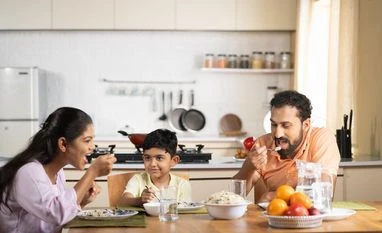
A gentle, positive conversation about food can help children build a lifelong healthy relationship with eating. (Photo: AdobeStock)
Listen to This Article
Have you ever told your child, “Don’t eat that, it’s bad for you,” or praised them for finishing their vegetables? These comments feel helpful. Yet experts say they may shape how children see food, and themselves. In trying to raise healthy eaters, many families end up creating food guilt instead. Here’s how to talk to children about food in a way that builds confidence, balance and comfort at the table.
How should parents talk to children about food?
According to Dr Supriya Malik, Consultant Paediatrician at Embrace x Madhukar Rainbow Children’s Hospital, Delhi, it all begins with language.
“The words we use shape a child’s emotional world,” she says. “Avoid calling foods ‘good’ or ‘bad’. Instead, talk about what food does for the body.”
So rather than saying “Sugar is bad for you,” try “Cookies taste great, and we enjoy them sometimes.” Replace “Eat carrots, they’re good for you,” with “Carrots help our eyes see better.”
Dr Shreya Dubey, Associate Director – Paediatrics & Neonatology, CK Birla Hospital, Gurugram, agrees. She suggests using the “everyday foods vs sometimes foods” framework.
Also Read

 "World Diabetes Day 2025")
 "tuberculosis")
 "Polio")
 "fact check, air pollution")
 "childhood high blood pressure")
“Everyday foods are nutritious options we eat often. Sometimes foods are enjoyed occasionally, they are not forbidden, just occasional.”
This gentle, non-judgmental language helps children understand that food is not a moral choice and is a mix of nourishment and joy.
ALSO READ | Kids' Health and Screen Habits: Dr. Morepen Sparks a National Conversation on the Need to Play More
Can children develop food guilt or anxiety at an early age?
The doctors say they do, and much earlier than most parents think.
“Conversations about ‘good’ versus ‘bad’ foods can start affecting a child as early as preschool,” warns Dr Malik. “That’s when they begin internalising praise or criticism.”
The early signs, she says, can be subtle but revealing:
- Fear of certain foods: “That will make me fat.”
- Avoiding social events that involve food.
- Getting anxious when portions change.
- Obsessively reading labels or counting calories.
- Rebelling and eating the ‘bad’ food.
- Obsessing or binge eating and then feeling guilty.
Dr Dubey adds, “If your child starts skipping meals, expressing guilt about eating, or shows physical changes like sudden weight loss or fatigue, these may be red flags. These are cues for gentle conversations, not confrontation, and sometimes, for professional help.”
How does a parent’s own relationship with food influence the child?
Children watch more than they listen.
“If a parent constantly says, ‘I shouldn’t eat this cake,’ or ‘I’m being naughty today,’ the child learns that food is tied to guilt,” says Dr Malik.
To model balance, experts suggest:
- Eat the same food as your child and show enjoyment.
- Avoid negative body talk, about yourself or anyone else.
- Keep mealtimes calm and connected, not rule-driven.
- Encourage children to listen to their bodies rather than eat out of pressure.
Dr Dubey notes that family meals are powerful emotional lessons: “When parents approach food with ease, children internalise that eating is normal, flexible, and joyful.”
ALSO READ | Childhood hypertension has doubled globally in 20 years, Lancet warns
How are ‘clean eating’ and social-media trends affecting children?
“Children as young as eight to ten are now exposed to influencer diets, detoxes and ‘clean eating’ trends,” says Dr Malik. “These often glorify restriction and perfection.”
That can lead children to think only certain foods or body types are “worthy”.
Dr Dubey points out that much of this content is curated, sponsored, or filtered. “Parents need to help children think critically, and ask, ‘Is this advice from a doctor, or someone selling something?’”
Instead, make health about how they feel: strong, energised and focused, not how they look.
What’s a healthier way to talk about balance, hunger and food pleasure?
Talk about feelings, doctors stress.
“This meal makes me feel warm and full,” works better than “I should eat this because it’s healthy.”
Use “everyday” and “sometimes” foods as your framework, and remind your child that both are part of life.
Dr Malik emphasises normalising food pleasure: “It’s okay to enjoy dessert! Food is not a reward or punishment, it is about connection, culture and joy.”
Encourage mindfulness by checking in together: “Does your stomach feel full, or do you want a bit more?” These small phrases teach self-regulation, not restriction.
Can getting children involved in cooking actually help?
“Yes, immensely,” say both experts. When children cook or help with grocery shopping, food becomes about connection, not control.
They learn where food comes from, discover variety, and feel empowered to make choices.
Make it interactive:
- Let your child pick one new fruit or vegetable to try.
- Involve them in planning a family meal.
- Talk about colours, textures and traditions, not calories.
As Dr Malik puts it, “Children who are included in the process are more likely to try new foods and build a lifelong positive relationship with eating.”
For more health updates, follow #HealthWithBS
This content is for informational purposes only and is not a substitute for professional medical advice.
More From This Section
 "Diabetes in kids")
 "screen time and sleep, blue light")
 "tobacco and cannabis, smoking")
 "protein shakes breakfast")
 "person checking blood sugar")
Don't miss the most important news and views of the day. Get them on our Telegram channel
First Published: Nov 14 2025 | 2:20 PM IST