


Don't fear therapy: Experts reveal what really happens in the first session
Therapy isn't as intimidating as it seems; experts say it's one of the smartest tools to cope with modern stress, offering self-discovery, growth, and emotional strength
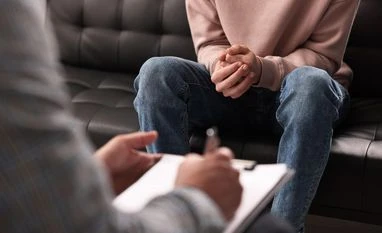 "therapy session, mental health")
Therapy isn’t about weakness, it is about finding clarity, strength, and balance in everyday life. (Photo: AdobeStock)
Listen to This Article
Therapy is still something people wonder about and aren’t sure of. Is it just talking? Will it even help? Is it worth the time and money? Is it only for people with “serious” problems? These are the questions that keep many people from seeking help. The truth is, therapy isn’t as intimidating as it seems, and it could be one of the smartest tools to cope with modern stress.
Business Standard spoke with Dr Gorav Gupta, CEO and Senior Psychiatrist, Tulasi Healthcare, Gurugram, and Dr Munia Bhattacharya, Senior Consultant, Clinical Psychology, Marengo Asia Hospitals, Gurugram, to bust these fears.
Why are so many people afraid of therapy?
A lot of the hesitation comes from stigma and myths. As Dr Gupta explains, “Counselling is misunderstood, and a great deal of resistance stems from fear of the unknown.”
Some of the most common myths include:
- “Therapy is only for weak or crazy people.” Not true. It’s for anyone who wants to understand themselves better, manage stress, or build resilience.
- “The therapist will judge me.” Therapy is judgment-free. As Dr Bhattacharya says, “It’s a collaborative conversation, not a courtroom.”
- “They’ll just give me pills.” Only psychiatrists prescribe medication, and even then, it’s part of a larger plan. Psychologists and counsellors focus on evidence-based talk therapies.
In India, the cultural stigma adds another layer. Many still think issues should stay “within the family” or worry about “log kya kahenge” (what will people say). This makes many young professionals, who are already under pressure, hesitant to seek help, even when they need it most.
Also Read

 "Understanding whom to reach out to can make seeking help less overwhelming. (Photo: AdobeStock)")
 "snakes, snakebite, snake")
 "H3N2 influenza Delhi NCR")
 "Food cravings, food addictions, junk food, processed food, unhealthy food, health, nutrition")
 "mental health survey for workplace")
How does the first therapy session look like?
Forget the movie scenes of lying on a couch under harsh scrutiny. According to both experts, the first therapy session is actually just a chat. As Dr Gupta puts it, “The first session isn’t an interrogation; it’s a safe, judgment-free chat.”
This is how it goes:
- It’s not an interrogation: You’ll be asked simple, open-ended questions like “What brings you here?” or “What would you like to work on?”
- You set the pace: You don’t need to share your deepest secrets on Day 1.
- Structure and safety: Therapists explain confidentiality, ask about your lifestyle (sleep, mood, stress levels), and get a sense of your world.
How do therapists decide on the right approach?
Therapy is like a toolkit, and your therapist chooses the right tool depending on what you need.
- CBT (Cognitive Behavioural Therapy): Helps tackle negative thought loops, anxiety, or procrastination.
- Psychodynamic therapy: Explores how your past affects your present.
- Mindfulness-based approaches: Teach you how to manage stress and stay present.
- Humanistic therapy: Focuses on personal growth and self-discovery.
Is therapy really confidential and judgment-free?
Yes. Confidentiality is sacred, and therapists are trained to listen without bias. Dr Bhattacharya explains, “What you say in therapy stays in therapy. The only exceptions are when there is risk of harm to yourself or others.”
- Flexible schedules: Evening or weekend sessions and teletherapy options are available.
- Online therapy: Convenient, discreet, and effective for those on the go.
Think of it as an investment. Just like you’d spend on fitness, grooming, or learning, therapy invests in your mental and emotional well-being, something that impacts every part of your life.
So, the next time work troubles or relationships get to you, and stress feels overwhelming, remember that therapy is not a sign of weakness, it is a step towards strength.
As Dr Bhattacharya says, “Taking the step towards therapy is a brave decision. Real strength is knowing when to use the tools available to you.”
For more health updates, follow #HealthWithBS
This content is for informational purposes only and is not a substitute for professional medical advice.
More From This Section
 "depression in women")
 "mammogram")
 "mental health, anxiety, emotional support")
 "Weight loss drugs, Wegovy, Ozempic, Zepbound, and Mounjaro")
 "Celebs on mental health")
Don't miss the most important news and views of the day. Get them on our Telegram channel
First Published: Oct 13 2025 | 1:16 PM IST