


WHO & UNICEF warn billions still lack basic services in health facilities
A UN report on progress in universal access to water, sanitation, hygiene and health care facilities shows that billions of people still visit health care facilities that lack the basics services
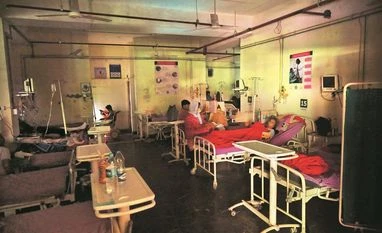 "hospitals health hospital bed")
In 2022, nearly 1 billion people depended on health centres with either no electricity.
Listen to This Article
While more than 100 countries around the world have stepped up efforts to strengthen basic services in health care, billions of people around the world continue to depend on facilities that lack essential services. A new joint report from the World Health Organization (WHO) and Unicef on essential services in healthcare facilities emphasises the urgent need for accelerated efforts and investment to meet UN’s 2030 global targets.
The report titled ‘Essential Services for Quality Care: Water, Sanitation, Hygiene, Health Care Waste and Electricity Services in Health Care Facilities’ cites Dr Ruediger Krech, director a.i, department of environment, climate change and health at WHO urging governments and partners to step up investments to deliver on the UN goals and make all facilities safe, sustainable, and resilient.
Key findings of the report
Billions lack access to basic services: According to the report, around 1.1 billion people were treated in health care facilities without clean water in 2023, while 3 billion people had no access to basic sanitation. Another 1.7 billion people lacked basic hygiene facilities and 2.8 billion people were in facilities without proper waste services. In 2022, nearly 1 billion people depended on health centres with either no electricity (433 million) or unreliable power supply (478 million).
Also Read

 "Alzheimer's, Parkinson's, old age")
 "Denmark forced contraception, Greenland IUD scandal")
 "H3N2 influenza Delhi NCR")
 "yawn spinal injury")
 "Gut issues and autism connection")
Some progress is visible: On a positive note, by 2025, 101 countries around the world shared verified data on WASH (Water, Sanitation and Hygiene), waste, and electricity in health facilities, up from 47 countries in 2020.
National action is rising: Over 80 per cent of countries have started measures like setting standards or carrying out assessments. Some of the poorest nations such as Ethiopia, Malawi, Nepal, Rwanda, and Uganda are showing strong readiness to scale up improvements.
Biggest challenge is money: According to the report, more than half the countries now have national plans, but only one in five have enough dedicated funding to carry them out.
What is WASH?
According to charity organisation WaterAid India, WASH stands for water, sanitation and hygiene. It is a holistic approach ensuring access to clean water, proper sanitation, and hygiene practices to improve public health.
The WHO underscores that WASH is not only a prerequisite to health but also contributes to livelihoods, school attendance, dignity, and resilient communities. It plays a vital role in preventing neglected tropical diseases (NTDs) such as trachoma, soil-transmitted helminths, and schistosomiasis.
Steps to strengthen WASH in India
Several Indian and international organisations, including WHO, UNICEF, and WaterAid India, are working to improve WASH in India.
Jal Jeevan Mission: Announced in August 2019, it aims to provide piped water supply to every household by 2024. UNICEF has supported its implementation, ensuring alignment with the Sustainable Development Goals.
Swachh Bharat Mission: India has made rapid progress in ending open defecation, with an estimated 450 million fewer people defecating in the open by 2019. The mission now focuses on solid and liquid waste management across urban and rural areas across the country.
Swachh Bharat, Swachh Vidyalaya (SBSV): Launched alongside Swachh Bharat, SBSV improves school sanitation, WASH curriculum, and hygiene practices while promoting community ownership of water and sanitation facilities in schools.
Kayakalp: Instituted in 2015 by the Ministry of Health and Family Welfare with UNICEF support, this scheme rewards health facilities for promoting cleanliness and improving service quality based on external state-level assessments
More From This Section
 "vitamin C deficiency")
 "adverse drug reactions")
 "Pregnancy, Pregnant woman")
 "HMPV, disease, illness, health")
 "Kristen Fischer")
Don't miss the most important news and views of the day. Get them on our Telegram channel
First Published: Sep 25 2025 | 2:58 PM IST