


Delhi records highest annual avg of NO2 levels since 2018; ITO worst hit
ITO, known for heavy congestion and long waits at traffic signals, recorded the highest annual mean level at 69 µg/m³. Other hotspots included IGI Airport's Terminal 3, Anand Vihar, and Shadipur
 "Smog, Delhi Pollution, Delhi Air Quality, Pollution")
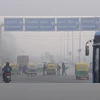
According to the report, some of the areas that witnessed the high nitrogen dioxide concentration this year included IIT-Delhi (59µg/m³), Okhla Phase-2 (59 µg/m³), Dwarka Sector-8 (56 µg/m³), Pusa (54 µg/m³) | (Photo:PTI)
Listen to This Article
Delhi, which is battling with the worsening air quality, has recorded its highest annual average of nitrogen dioxide (NO2) levels since 2018, according to a report by The Times of India.
The average concentration of the toxic gas until December 22 was 47 micrograms per cubic metre, higher than last year’s 43 µg/m³, and exceeding both the Indian national standard of 40 µg/m³ and the World Health Organization’s (WHO) guideline of 10 µg/m³ by nearly five times.
Nitrogen dioxide is a highly reactive gas generated by the burning of fuel, and it contains emissions from vehicles, power plants, and various industries.
The report cited EnviroCatalyst, a think tank, which analysed the data by Central Pollution Control Board (CPCB). According to EnviroCatalyst, in 2023, the annual average concentration of nitrogen dioxide was 35 µg/m³, 40 µg/m³ in 2022 and 2021, 39 µg/m³ in 2020, 45 µg/m³ in 2019, and 48 µg/m³ in 2018.
Where are the pollution hotspots?
High-traffic zones and industrial areas showed the highest concentration of nitrogen dioxide this year. Among them, ITO, known for heavy congestion and long waits at traffic signals, recorded the highest annual mean level at 69 µg/m³. Other hotspots included IGI Airport’s Terminal 3, Anand Vihar, Shadipur, and Wazirpur, with readings above 60 µg/m³ in each location.
Also Read

 "Delhi Winter, New Delhi Winter, Winter, Cold, Smog, Delhi Pollution, Delhi Air Quality, Pollution")
 "climate change, health")
 "Fog, Delhi Fog")
 "Aravallis")
 "Delhi Winter, New Delhi Winter, Winter, Cold, Smog, Delhi Pollution, Delhi Air Quality, Pollution")
Sunil Dahiya, founder and lead analyst at EnviroCatalyst, told the newspaper that "burning of waste in several localities has also contributed to its elevated levels". He further said there is a need to reduce emissions from local sources within the city.
ALSO READ | Grap IV restrictions lifted in Delhi-NCR as air quality improves
Which areas witnessed high concentration in 2025?
According to the report, some of the areas that witnessed the high nitrogen dioxide concentration this year included IIT-Delhi (59µg/m³), Okhla Phase-2 (59 µg/m³), Dwarka Sector-8 (56 µg/m³), Pusa (54 µg/m³), Chandni Chowk (53 µg/m³), Najafgarh (52 µg/m³), Major Dhyan Chand National Stadium (52 µg/m³), Jahangirpuri (51 µg/m³), Dr Karni Shooting Range (50 µg/m³), and Patparganj (50 µg/m³).
Cocktail of pollution during early winter in Delhi-NCR
Recently, a new assessment by the Centre for Science and Environment (CSE) of early winter (October–November) and annual air quality trends in the national capital highlights rising air toxicity, worsening pollution in smaller towns across the NCR, and the risk of reversing Delhi’s long-term air quality gains.
Anumita Roychowdhury, executive director at CSE, told the newspaper, "Delhi and NCR cannot hide behind the smokescreen of farm fires any more as even with much lesser contribution to local air quality this time, air quality has turned very poor to severe, exposing the impact of local sources. But more worrying is the daily synchronised rise of PM2.5 and other toxic gases of nitrogen dioxide (NO2) and carbon monoxide (CO), largely from vehicles and combustion sources, creating a toxic cocktail that has gone unnoticed."
She further said there is an urgent need to bring deep-rooted shifts in infrastructure and systems to upscale action to bring down emissions from vehicles, industry, power plants, waste, household energy, and construction.
ALSO READ | IMD issues alerts for cold wave, fog, snowfall across India
Delhi AQI today
Delhi's air quality on Thursday improved after hovering in the 'severe' zone for nearly two weeks, with the citywide air quality index (AQI) moving into the ‘poor’ category. The 24-hour average AQI stood at 220, while Anand Vihar recorded the highest reading among monitoring stations at 297 at 8 am, according to the Central Pollution Control Board (CPCB). Officials attributed the improvement to stronger winds, though forecasts indicate conditions could deteriorate again.
Delhi had last reported ‘poor’ air on December 10. After that, AQI levels stayed in the ‘very poor’ to ‘severe’ range for several days before easing again on December 24.
More From This Section
 "PM Modi")
 "Accident, road accident")
 "Rahul Gandhi, Rahul, Congress leader")
 "Kuldeep Sengar, EX-BJP MLA, Unnao rape case accused")
 "MGNREGA")
Topics : Delhi air quality air pollution BS Web Reports
Don't miss the most important news and views of the day. Get them on our Telegram channel
First Published: Dec 25 2025 | 9:03 AM IST