


SC asks why drug price caps cannot extend beyond cancer medicines
Bench questions steep mark-ups on medicines and medical devices; Centre says price regulation must balance affordability with availability
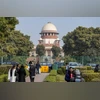 "Supreme Court, SC")
A Bench of Justice Vikram Nath and Justice Sandeep Mehta said the move addressed only a small part of the wider problem of drug affordability and pressed the government to justify why patients continued to pay steep mark-ups on commonly used medicines and medical devices.(Photo: PTI)
Listen to This Article
The Supreme Court on Monday questioned the Centre’s decision to cap trade margins on anti-cancer drugs at 30 per cent, asking why similar restrictions could not be extended to other medicines and medical consumables amid glaring disparities between procurement costs and maximum retail prices (MRPs).
A Bench of Justice Vikram Nath and Justice Sandeep Mehta said the move addressed only a small part of the wider problem of drug affordability and pressed the government to justify why patients continued to pay steep mark-ups on commonly used medicines and medical devices.
The court said its objective was to strengthen the government’s efforts to regulate drug prices, not undermine its authority.
The observations came weeks after the court flagged instances of cancer drugs bought for Rs 2,700 carrying an MRP of Rs 27,000, describing such pricing as “broad daylight dacoity” and a fraud on public health schemes.
During Monday’s hearing, the Bench cited the example of an Indian-made cardiac stent with a price to retailer (PTR) of Rs 5,000 but an MRP of Rs 25,000. It said a cap of 16 per cent on margins could substantially reduce unnecessary medical interventions allegedly driven by financial incentives.
Also Read

 "healthcare, doctor")
 "oral weight-loss pills")
 "Diwali air pollution, firecrackers")
 "SC, Supreme Court")
 "SC, Supreme Court")
When Solicitor General Tushar Mehta submitted that cardiac stents were already subject to price controls, the court pointed to other products to question the adequacy of existing regulation.
“Azithromycin, MRP Rs 78.29, PTS (price to stockist) Rs 28.50. Tell us one beneficial reasoning for the patient,” the Bench asked. It also cited a saline drip line with an MRP of Rs 11 that was reportedly being sold for Rs 270, questioning how manufacturers determined prices that differed so sharply from underlying costs.
Senior officials aware of the matter told Business Standard that margin capping could eventually be extended beyond cancer drugs to other non-scheduled formulations, medical consumables and devices.
The Department of Pharmaceuticals (DoP) had told a Parliamentary Standing Committee on Chemicals and Fertilisers in August that it was examining a proposal to incorporate trade margin rationalisation (TMR) into the Drugs (Prices Control) Order (DPCO). No timeframe has been set for the broader framework.
The court was hearing a petition seeking mandatory prescriptions of generic medicines, upfront price controls on non-scheduled drugs and caps on the MRPs of medical devices.
Petitioner Kishan Chand Jain had argued that under the DPCO, 2013, the National Pharmaceutical Pricing Authority (NPPA) fixes ceiling prices for around 1,000 scheduled formulations, leaving nearly 82 per cent of medicines outside this framework.
Additional Solicitor General Aishwarya Bhati said the government had to balance affordability with the availability of medicines and market considerations. Excessive intervention, she argued, could adversely affect the pharmaceutical market and disrupt supplies.
She also submitted that India already had some of the lowest medicine prices.
In an earlier interaction with Business Standard, Abhay Soi, chairman and managing director of Max Healthcare Institute, had cautioned that uniform caps on pharmacy margins would put pressure on hospital profitability, as medicine-related charges also cover manpower, preparation, administration, monitoring and patient safety costs. He had said listed hospitals typically operate at net margins of 8–12 per cent.
The Bench questioned the patient-centric justification for existing margins, asking whether medicines subject to DPCO controls were failing to reach consumers despite regulated margins.
Mehta told the court that the government would publish a list of cancer medicines covered by the 30 per cent trade-margin cap and review it periodically. The measure is expected to generate annual savings of around Rs 2,500 crore and reduce patients’ out-of-pocket expenditure, according to the government.
Senior advocate Kapil Sibal, appearing for the Indian Pharmaceutical Alliance, disputed the suggestion that excessive mark-ups were prevalent across most formulations.
The court concluded the hearing and posted the matter for further consideration on October 27.
More From This Section
 "delhi metro, metro")
 "Rahul Gandhi, Rahul, Delhi Protest, Protest, EC Protest, ECI Protest, Jantar Mantar Protest, CEC Protest")
 "monsoon, India Monsoon")
 "Jantar Mantar")
 "social media")
Don't miss the most important news and views of the day. Get them on our Telegram channel
First Published: Oct 12 2026 | 7:47 PM IST