


'Shocks our conscience': SC rebukes UP govt for Prayagraj demolitions
The Supreme Court slammed the Uttar Pradesh government for the 'inhuman and illegal' demolition of houses in Prayagraj, ordering ₹10 lakh compensation to each affected owner
 "SC, Supreme Court")
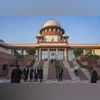
The Supreme Court described the demolition in Prayagraj as a move that ‘shocked’ its conscience (Photo: PTI)
Listen to This Article
The Supreme Court on Tuesday slammed the Uttar Pradesh government and the Prayagraj Development Authority, accusing them of carrying out an ‘inhuman and illegal’ demolition of houses. The court reminded the authorities that the country operates under the rule of law and such actions cannot be allowed.
The Supreme Court said residential structures should not be demolished in such a manner, highlighting that the right to shelter and due process of law must be upheld.
The court described the demolition in Prayagraj as a move that ‘shocked’ its conscience, stressing the importance of proper legal procedures in such matters. It directed the Prayagraj Development Authority to pay ₹10 lakh compensation to each of the affected homeowners within a six weeks period.
‘High-handed’ demolition sparks outrage
This decision comes after the court had, on March 24, made similar remarks, calling the demolition ‘high-handed’ and stating that it was a violation of basic legal principles. Justices Abhay S Oka and Ujjal Bhuyan are currently hearing the petition filed by Zulfiqar Haider, Ali Ahmed, and other affected individuals whose homes were demolished.
The petitioners had earlier approached the Allahabad High Court, which rejected their plea challenging the demolition. The petitioners claimed that they were served a notice on March 6, 2021, regarding alleged illegal constructions on a plot identified as Nazul Plot No. 19, located in Lukerganj, Prayagraj.
Also Read

 "Supreme Court, SC")
 "Ranveer Allahbadia")
Incorrect assumption behind demolition
The counsel for the petitioners argued that the demolition was carried out based on a misunderstanding. They claimed that the government wrongly assumed that the land in question belonged to Atiq Ahmed, a gangster-politician who was killed in a police encounter in 2023.
The petitioners also alleged that the UP government acted on this incorrect assumption, leading to the demolition of their homes.
UP govt defends demolition
In the previous hearing on March 24, Attorney General R Venkataramani defended the state’s actions, stating that the government had followed the due process of law in serving notices to the homeowners.
He argued that the state was dealing with widespread illegal occupations in the region, which made it difficult to control unauthorised possession of land.
[With PTI inputs]
More From This Section
 "Kapil Mishra")
 "Ashwini Vaishnaw, Ashwini, Vaishnaw")
 "Noida expressway")
 "Kiren Rijiju, Kiren, Rijiju")
 "Migrants,Death")
Don't miss the most important news and views of the day. Get them on our Telegram channel
First Published: Apr 01 2025 | 3:20 PM IST