Sales in the weight loss market soared to ₹1,230 crore in 2025, against ₹571 crore in 2024.
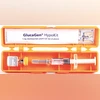
GLP-1 agonists are a class of medications that help regulate blood sugar, increase fullness (satiety), and slow stomach emptying, leading to weight loss and improved glucose control for type 2 diabetes and obesity
Among them, Eli Lilly’s Mounjaro (tirzepatide) topped the revenue charts, recording ₹601 crore in sales within nine months of its launch in March 2025, while Novo Nordisk’s Wegovy (semaglutide) saw overall sales of ₹61 crore in six months.
On the other hand, Ozempic, launched only last month in India has raked in ₹1 crore.
Despite this growth, GLP-1 agonists still contribute only around 5 per cent to the overall anti-diabetes market, which caters to over 100 million people in India.
This segment is still dominated by insulins and insulin reducing oral antidiabetic drugs (OADs) like SGLT-2 inhibitors (empagliflozin) and DPP4 inhibitors (liragliptin and sitagliptin), according to data from market research firm Pharmarack.
While OADs, both plain and as combinations, contribute 74 per cent to India’s anti diabetes segment sales, insulins raked in ₹4,626 crore as sales on a moving annual turnover (MAT) basis for 2025, contributing 21 per cent of the overall anti diabetes market.
Sukhvinder Singh Saggu, director for minimal access, GI and bariatric surgery at Delhi’s CK Birla Hospital told Business Standard that while Mounjaro has shown strong sales numbers, he is not seeing any notable increase in patients specifically asking for the drug.
“Prescriptions continue to be driven by clear medical indications and individual patient assessment, not by market trends. If a patient approaches us seeking the medication purely for cosmetic or non-medical reasons, we do not prescribe it,” he added.
With semaglutide expected to lose its patent in March this year, experts say that the introduction of branded generics will trigger an acceleration in volumes for GLP-1 agonists, even as value growth may moderate due to price erosion.
Historically, branded generics are launched at 25 to 30 per cent of innovator pricing, triggering a two to five-times surge in unit consumption over the initial three months.
“A similar uptake is likely in the anti-obesity segment upon the degree of price economisation at launch,” Sheetal Sapale, vice president (commercial) at market research firm Pharmarack said.
Anti-diabetes therapy, however, will continue to grow with an expanding patient pool and earlier initiation of therapy due to awareness.
“Newer classes of drugs, such as GKP-1 and Dpp4i/SGLT-2 combos and branded generics are driving incremental growth in traditional regimes,” Sapale said.
She added that while the anti-diabetes therapy segment delivers scale without major innovation, anti-obesity delivers both innovation and volume.


 "glp, inject")