This comes as industry insiders say there is little clarity on refunds following scrapping of the earlier tariff policy by the US Supreme Court.
“The US administration may still stall refunds for the time being,” the chief executive officer (CEO) of a Delhi-based medtech export firm told Business Standard.
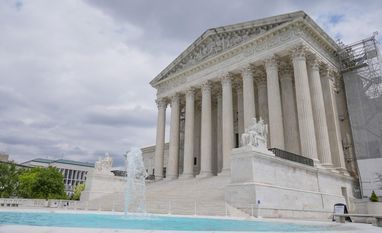
On Friday, the US Supreme Court ruled that President Donald Trump exceeded his authority by imposing tariffs under the International Emergency Economic Powers Act (IEEPA), a 1977 law meant for national emergencies.
Following the ruling, Trump announced that from February 24, a 10 per cent tariff would apply on goods imported into the US under Section 122, including from India, unless exemptions were specified, later raising the baseline tariff to 15 per cent.
Against this backdrop, a senior auto industry executive said that unlike sectors such as textiles or food, auto components cannot be switched overnight as production lines and machinery are often customised to specific vehicle platforms.
India-US trade in auto components continued to expand, with India’s exports to the US rising from $3.56 billion in FY21 to $6.23 billion in FY25. Over the same period, US exports of auto components into India increased from $904 million to about $1.5 billion.
“The industry has not asked for any subsidy from the government and also does not foresee any immediate disruption from tariff-related uncertainties,” he added.
A similar caution is visible in the medical devices sector.
India’s medical device exports to the US stood at $787.57 million in FY25, registering a 9.55 per cent annual growth from $714.30 million in FY24.
“Exporters are monitoring global trade developments, as they always do in a dynamic geopolitical environment. If there are changes that affect duty structures or refunds, we are confident that our government will take the best view in the larger national interest,” said Pavan Chaudary, chairman of the Medical Technology Association of India (MTaI).
At the same time, exporters place a premium on policy predictability, with executives noting that some firms may be cautious about sending device shipments to the US in the near term.
“We would rather focus on diversification and long-term resilience rather than reacting to short-term shifts,” another industry executive added.
Another executive cautioned that prolonged uncertainty could make global buyers more circumspect when considering India as a long-term sourcing destination.


 "US supreme court")