Volumes may be up. But companies are guiding for a $3-7/tonne increase in coking coal costs in Q3. And, although NMDC implemented a price cut of ₹500/tonne in October 2025, it would only be a partial relief.
Analysts project that Indian steel makers will see operating profit per tonne down by around ₹2,000 due to lower realisations and higher CoP.
Imports may cause some concern.
The 12 per cent provisional safeguard duty expired in November 2025 and Chinese steel exports continue, with a narrowing price gap in favour of domestic producers.
Chinese hot rolled coil (HRC) has landed costs of ₹49,700/tonne without safeguard duty and domestic HRC is at ₹45,700/tonne. This sets a ceiling on upside for domestic players.
There are proposals for a staggered multi-year safeguard levy awaiting approval from the finance ministry.
Hence, Q3 results may be muted with tight spreads and recovery dependent on policy clarity about safeguard duty extension and/or better global prices.
But some commodity trackers believe this is the bottom of the steel cycle and there could be steady recovery and an upside, going forward.
There’s a big downside risk if prices are lower for an extended period. However, market prices imply traders are expecting a spread improvement of ₹3,000/tonne over the medium term. An extension of safeguard duty, coupled with absorption of excess supply, should lead to sustainable price recovery.
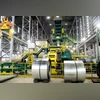
Jindal Steel (JSL) may be well placed when the cycle turns. It recently commissioned one of India's largest blast furnaces (BF-II; 4.6 million tonnes per annum or mtpa capacity) along with a basic oxygen furnace (BOF-II; 3 mtpa capacity) at its Angul integrated plant in Odisha.
By FY27, JSL will target a total liquid steel-making capacity of 15.6 mtpa up from 9.6 mtpa and finished capacity of 13.8 mtpa from 7.3 mtpa.
Domestic demand remains strong with provisional joint plant committee data indicating that finished steel consumption grew 7.4 per cent year-on-year (Y-o-Y) to 105.2 million tonnes (MT) during April-November 2025.
A seasonal uptick in demand in Q4 should aid in pushing prices.
JSL's higher proportion of value-added products (VAP) in its sales mix (VAP share was 73 per cent of sales mix in Q2FY26 versus 58 per cent during Q2FY25) would aid profitability.
The management has guided for FY26 sales volume of 8.5-9 MT against 8 MT in FY25.
Domestic rebar prices are at a slight premium to HRC prices which aids JSL's long products portfolio (51 per cent of sales mix in Q2FY26).
JSL has five thermal coal blocks in India, namely Utkal C, Gare Palma IV/6, Utkal B1, Utkal B2, and Saradhapur Jalatap East coal block. Of this, Utkal C and Gare Palma IV/6 are operating at rated capacity and mining from Utkal B1 block is expected to commence in Q4FY26.
JSL has also commenced exploration of the recently-won Saradhapur Jalatap East coal block (resources of 3,257 MT).
The company was able to meet 96 per cent of thermal coal requirements from captive sources during Q2FY26 and would be self-sufficient in thermal coal soon.
JSL also mined 2 MT of iron ore during Q2FY26 (45 per cent of consumption) from captive mines at Tensa and Kasia. Ramp up of captive iron ore mining, coupled with an upcoming slurry pipeline (expected to be operational in H2FY26) and coal pipe conveyor would aid profitability.
The balance sheet shows consolidated net debt at ₹14,160 crore at the end of Q2FY26 (down 1.7 per cent quarter-on-quarter or Q-o-Q). Net-debt-to-operating-profit is at 1.48 times (versus 1.49 times at Q1FY26, and below the company's target of 1.5 times). This is the best ratio among Indian peers.
Capex plans and working capital requirements may push up debt in the near term, though the balance sheet won’t be under much stress.
While Q3FY26 results may disappoint, the expected volume expansion and strong product mix could make a share price dip an attractive entry point.


 "Jindal steel angul plant")