By September 1939, China and Japan were enmeshed in a conflict, which had claimed over a million lives. Germany had annexed Austria and Czechoslovakia. Japan and Russia had gone to war in Mongolia. The Spanish Civil War (1936-39) had been won by Germany’s ally, General Franco. Italy had invaded what is now Ethiopia, Eritrea, Somalia, and Libya. The USSR annexed Estonia, Latvia and Lithuania and grabbed a chunk of Finland.
Circa February 2026, the Ukraine War crossed the four-year mark. The Gaza invasion, which started in October 2023, continues. India and Pakistan have had a brief conflict. Pakistan is now fighting Afghanistan. The US has sunk boats off the coast of Venezuela and carried out an operation to abduct the President of Venezuela. The strikes on Iran and Iran’s counter-strikes on sundry US allies have turned the Gulf into a war zone.
Then, as now, access to energy was one of the key influences on strategic thinking. Japan attacked the US in 1941 because the US embargoed oil sales, and Japan couldn’t get hold of oil from Indonesia and Malaya, without knocking out the US Pacific Fleet. Germany invaded the Soviet Union in 1941 in part to grab its oil-fields. The UK and the USSR jointly invaded Iran to prevent Germany from laying hands on Iran’s oil, and Britain and Germany fought across North Africa for the same reason.
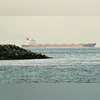
The Strait of Hormuz is currently closed to shipping, choking off 20 per cent of global oil and gas supply. Qatar has shut down LNG production citing force majeure. Tanker charter rates have spiked to all-time highs. Insurers have hiked shipping premiums.
Brent crude futures are at $85/ barrel (March 6) up from $60 on February 28. LNG prices rose from $11/mmBTU (million British Thermal units) on February 28 to $24 by March 6, with gas tanker charter rates climbing over 600 per cent.
A big chunk of India’s gas and crude comes through the Strait of Hormuz. The US has kindly given India permission to import Russian crude for the next 30 days but that’s temporary. India’s Strategic Petroleum Reserves may last 74 days, according to a February 9 Rajya Sabha statement by Minister of Oil and Natural Gas Hardeep Singh Puri. Other assessments of SPR stocks range from 25 days to 50 days.
Oil and gas are necessary goods. Demand is relatively invariant. A small supply deficit can lead to big spikes in price. A supply deficit of 20 per cent is hardly small. One known unknown is the duration of conflict. A week long closure of the Strait and the loss of production in Iran have taken up to 2 per cent of annual oil-equivalent off the table. Also spare crude capacity in Saudi Arabia cannot be in play since it needs to move through the Strait of Hormuz.
Every week without a ceasefire and with the Strait of Hormuz shut will mean the loss of another 0.5 per cent or so of annual global supply. Analysts modelling global supply-demand say that prices would climb exponentially if the conflict lasts more than five to six weeks, as inventories start being depleted. Some models indicate gas may hit $40/mm BTU and Brent may rise past $220/ barrel at beyond six weeks.
India’s fuel prices are linked to Brent. Retail petrol and diesel prices may be reviewed daily by the oil marketing companies.The APM (administered pricing mechanism) gas and NWG (new well gas) pricing is reviewed every six months. If the Strait is closed in April when the gas pricing review comes up, the reset would be a headache.
A sharp hike in retail prices could send the economy into a downward spiral. But cushioning retail prices means a big subsidy burden. Fertiliser subsidies would also climb. The knock-on effect on the macroeconomy may be considerable. India has endured recessions in every oil shock — 1973, 1979, 1991 — and there’s no apparent reason why this would be different. All Budget estimates and trade balance estimates made prior to March 1 are now subject to drastic reviews even if the parallels with WWII don’t become more pronounced.


 "Iran, US Iran, Israel Iran, LNG, Strait of Hormuz")