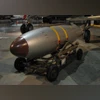
The US and Russia currently account for 90 per cent of all nuclear weapons. But there are now a total of nine nuclear-armed states, which collectively account for 12,241 warheads as of January 2025. Of those 9,614 are in military stockpiles for potential use, according to the Stockholm International Peace Research Institute (Sipri). Apart from the US and Russia, the remaining seven — the United Kingdom, France, China, India, Pakistan, North Korea, and Israel — have expanded and upgraded their programmes through 2024 and 2025. India, for instance, has overtaken Pakistan with 180 warheads, against Islamabad’s 170. Of particular concern is China, with 600 warheads in military stockpiles, reckoned to be the world’s fastest-growing nuclear arsenal. With 350 intercontinental ballistic missile silos in the works, Sipri estimates that by the turn of the decade, China could have at least as many intercontinental ballistic missiles as Russia or the US. It would be unrealistic, therefore, for any future START-type agreement to exclude China.
There are also signs that the nuclear-arms race is gaining traction with more states in West Asia, East Europe, and East Asia, where perceptions of security threats and the tide of nationalism are rising. This adds a menacing new dimension to the cause of global peace and security. It is axiomatic that the possession of nuclear weapons in itself does not prevent conflict — the low-intensity skirmishes between India and Pakistan being a case in point. But they come embedded with the constant threat of nuclear escalation, especially in countries led by hyper-nationalistic leaders such as Donald Trump, Vladimir Putin, or Xi Jinping. That is why a multilateral treaty involving all nuclear-armed nations and potential entrants has become increasingly critical, and the means to do so lies with the principal nuclear powers.
Although New START has expired, the legal obligation of the 191 states that are parties to the Non-Proliferation Treaty (NPT) to negotiate nuclear disarmament has not. The NPT, which neither India nor Pakistan has signed, was adopted in 1968, was indefinitely extended in 1995, and is up for review in April-May this year. In this context, the Treaty of Prohibition of Nuclear Weapons could play a useful role. Adopted by the United Nations in 2017, it is the only legally binding international agreement that prohibits activities involving nuclear weapons — from testing to use. Though nearly 100 countries have signed (with 70 ratifications), none of the nine nuclear-armed states has done so. The expiry of New START offers a good opportunity for the international community to rally the world towards a fresh start at nuclear disarmament.


 "nuclear weapon")