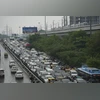
The Economic Survey 2025-26 mentions that transportation is the “bloodstream, spine and muscles” of a city, enabling the flow of people, goods, and ideas. When this system weakens, congestion, pollution, and falling productivity follow. The Survey further quantifies this cost starkly. A study by the Centre for Science and Environment estimates that even an unskilled worker in Delhi can lose up to ₹19,600 annually due to congestion. For skilled workers, the losses rise to nearly ₹26,000 a year. Another study by the Institute for Social and Economic Change estimated that Bengaluru alone lost about 700,000 productive hours in 2018. A report by Uber-Boston Consulting Group put the annual congestion cost of India’s four largest metros at $22 billion. The TomTom Traffic Index 2025 highlights how serious the problem has become. Bengaluru now ranks as the second-most congested city in the world, and Kolkata and Pune also rank among the slowest. India, overall, ranks fifth globally and second in Asia on congestion.
However, the core problem is not insufficient spending. India has expanded mass rapid transit significantly over the past decade. As of 2025, over 1,036 km of Metro and regional rapid-transit systems were operational in 24 cities, with more under construction. But rail systems alone cannot solve urban mobility when cities remain overly dependent on private vehicles. The roads are also being used more as storage for cars than as corridors for moving people. Buses, the most flexible and cost-effective form of mass transport, remain inadequate. While the Ministry of Housing and Urban Affairs recommends 40-60 buses per 100,000 people, India’s cities together have only about 47,650 buses, nearly 61 per cent of which are concentrated in just nine mega cities. Weak first- and last-mile connectivity further reduces the usefulness of Metro and rail investment.
Achieving real change will require a broader shift towards people-centric planning, with viable alternatives to private vehicles becoming the default choice. This means expanding and digitising bus fleets, making walking and cycling safe and attractive, integrating shared mobility for last-mile access, and implementing transit-oriented development around stations to shorten trip lengths. Technology-led traffic management and demand-based parking policies must also play a role. Urban mobility has become a central problem to economic growth. Without fixing how people move within cities, the Budget’s growth ambitions risk stalling at the signal.


 "Traffic, Traffic jam")