Thursday, January 01, 2026 | 02:03 PM ISTहिंदी में पढें
Business Standard
Notification Icon
userprofile IconSearch

US tariffs, shifting metrics and the risks facing India's economy in 2026

As the US disrupts global trade and India pushes major trade deals, 2026 will test whether reforms, new economic measures and shifting geopolitics can sustain India's growth momentum
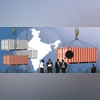
Trump Tariffs, Tariffs, Indian export, trade
premium

There will be important changes this year in the way the Indian economy is gauged and managed. | Illustration: Ajaya Mohanty

Business Standard Editorial Comment Mumbai

Listen to This Article

History will likely record 2025 as the year the world’s largest economy decided to upend the global trade order built over decades. The imposition of the so-called reciprocal tariffs by the United States (US) and trade negotiations with individual trading partners created enormous uncertainty and confusion. The impact of the shift in US policies, which will play out over time, will be analysed for years to come. For now, the US economy is doing reasonably well. It is being argued that the artificial intelligence-related investment boom is pushing up growth. India was particularly singled out by the US as President Donald Trump decided to mix trade and geopolitical objectives, without much basis, and hit India with a 50 per cent tariff. Since the US is India’s most important trade partner, the key thing to watch out for this year will be a mutually beneficial trade agreement. In fact, developments on the trade front in 2026 will significantly influence India’s prospects. 
Also, India is reportedly close to signing a trade deal with the European Union (EU). Similarly, the country is negotiating with several other trading partners, which should help Indian exporters. Policy openness to trade must be welcomed, and India must aim to go the distance this year. The government has withdrawn a number of quality-control orders, which are essentially import barriers. Since India is aiming to sign trade deals with large trading partners such as the US and EU, it should also reduce tariffs in general, which will enable it to get into global value chains. India will benefit from trade agreements only if the domestic business environment improves in a sustained manner. Committees have been set up to push deregulation, and it would be interesting to see the pace and scale of intervention this year. 
There will be important changes this year in the way the Indian economy is gauged and managed. A new series each for the consumer price index (CPI) and gross domestic product (GDP) will be released in February. The weighting of food in the CPI will likely reduce, making it more stable and predictable. Several issues have been pointed out by economists and experts in the current GDP series over the years, including the way activity in the informal sector is measured and how estimates of nominal output are deflated to arrive at real output. India is on course to become the fourth-largest economy in the world, and it’s important that measures designed to gauge economic activity and prices reflect the position on the ground. It is thus crucial that GDP and inflation series are updated at regular intervals. 
In terms of outcome, growth over the last two quarters surprised on the upside, and the policy objective should be to sustain the momentum. The Indian economy grew by 8 per cent during April-September. Meanwhile, the inflation rate in 2025 surprised on the downside and is currently running below the lower end of the Reserve Bank of India’s tolerance band. The inflation rate is expected to go up this year and remain around the target of 4 per cent. It will help push up nominal growth a bit, which is important in the context of fiscal management, among other things. The Union government will adopt debt to GDP as the fiscal anchor from the next financial year.  It will be crucial to observe how financial markets respond to this shift. In terms of macroeconomic management, as things stand, the external account may pose some challenges. The rupee is under pressure, largely owing to capital outflows. A lot will depend on how quickly a trade deal with the US is sealed. Besides, geopolitical developments could pose challenges.