


Best of BS Opinion: Writing a script where one's the villain and the victim
Here are the best of Business Standard's opinion pieces for today
 "SHORT SELLERS, Viceroy-Vedanta affair")
Illustration: Binay Sinha
Listen to This Article
Have you ever found yourself narrating your own downfall, mid-happening? Like watching yourself eat that sixth pani puri despite knowing your stomach's already waving a white flag. Or sending that risky text, half-hoping it doesn’t deliver. It's a strange sensation, being both the one who lights the match and the one who watches the fire rise. That’s what the world feels like currently. From AI brain-drains and misunderstood ideologies to short-sellers cast as traitors and cricketers who stopped just short of greatness, everyone seems caught playing both villain and victim in scripts they helped write. Let’s dive in.
Take Meta’s billion-dollar scramble for Chinese-origin AI talent. Catherine Thorbecke writes how the US is desperately courting the same researchers it once eyed with suspicion. Meanwhile, China, supposedly the loser in this talent tug-of-war, is building an even stronger bench by treating global experience as prep work—not poaching. In the global AI drama, the West writes itself as hero, but the talent, nearly half of it Chinese, may be quietly penning a different ending.
Meanwhile, Mihir S Sharma asks us to look past the shimmering glow of the American dream. Its racial and political storylines are so deeply specific that borrowing them can be hazardous. Yet the world often mimics America’s script on governance and economics, forgetting the US plays by rules no one else can afford. The cultural empire may last, but its domestic politics are less a global blueprint and more a Shakespearean tragedy: powerful, but not reproducible.
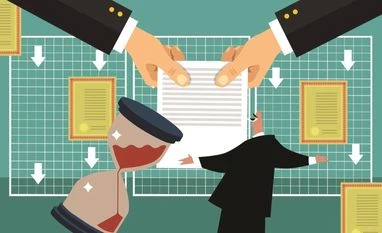
And then there’s the market’s favourite antagonist, the short seller. Devangshu Datta lays out how modern-day market saboteurs are often right in principle but wronged in perception. Whether it’s Hindenburg or Viceroy, these actors operate in full daylight, with reasoned bets and public disclosures. But nationalism often turns them into villains, ignoring that free markets need skeptics just as much as believers. Every drama needs both protagonists and foils, or it’s just propaganda.
Also Read

 "AI, artificial intelligence")
 "Mohan Bhagwat, Mohan")
 "SHORT SELLERS, Viceroy-Vedanta affair")
 "White House")
 "Mulder")
Closer home, Shekhar Gupta dissects the RSS chief Mohan Bhagwat’s cryptic call for leaders to retire at 75, a line that stirred speculation about Narendra Modi’s political future. But this wasn’t a plot twist. Modi remains the exception to RSS norms, much like he’s always been. The true generational handover may come post-2029, or if Bhagwat himself retires this September. Until then, quiet jockeying and succession shadows may deepen, but Modi’s grip on power keeps the curtains firmly drawn.
Sometimes, though, not playing the lead is the most heroic thing. Uddalok Bhattacharya captures this rare grace in Wiaan Mulder’s refusal to break Brian Lara’s record out of reverence. In a sport built on numbers, he chose humility over headlines. A reminder that even in a world obsessed with winning, stepping aside can be the boldest move of all.
Stay tuned!
More From This Section
 "markets")
 "mutual fund, SIP, systematic investment plans")
 "PUBLIC SECTOR")
 "Rare earth minerals")
 "A recent NITI Aayog paper recommends sweeping tariff cuts on a range of agricultural imports from the United States — including rice, dairy, poultry, corn, apples, almonds, and genetically-modified soya — as part of the proposed India-US Free Trade A")
Topics : BS Opinion BS Special Curated Content
Don't miss the most important news and views of the day. Get them on our Telegram channel
First Published: Jul 12 2025 | 6:30 AM IST