With elections approaching, several state governments, including those of Madhya Pradesh and Odisha, have announced the creation of new districts. In the previous year, the West Bengal Cabinet expressed its intention to establish seven new districts. However, this proposal could not be executed due to various reasons, such as a shortage of bureaucrats. Now, the government is contemplating the addition of at least 20 more districts to its existing 23.
Uttarakhand, which maintained the 13 districts it inherited when it was carved out of Uttar Pradesh in 2000, is also considering the creation of a minimum of five new districts.
Prior to the 2022 Punjab Assembly elections, the Congress government in Punjab divided Sangrur to form the Malerkotla district, which became the state’s first Muslim-majority district.
The surge in the creation of new districts was particularly prominent during the 1991–2001 decade, a trend significantly bolstered by the 74th Amendment to the Constitution that mandated the setting up and devolution of powers to urban local bodies. Enacted by Parliament in December 1992 and enforced in June 1993, the 74th Amendment mandated establishing district planning committees. The creation of new districts, often driven by local demands, are intended to decentralise the system, streamline administrative operations as smaller units make governance easier.


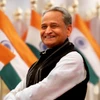 "Rajasthan Chief Minister Ashok Gehlot")