


Home / Specials / Supplements / 'Safety, connectivity in UP have led to exponential growth in tourism'
'Safety, connectivity in UP have led to exponential growth in tourism'
Minister Jaiveer Singh explains how religious corridors, improved security and robust infra are driving record-breaking footfall to propel state toward a trillion-dollar economy
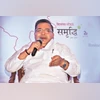 "Tourism Minister Jaiveer Singh speaks at the Business Standard Samriddhi programme in Lucknow")
premium
Tourism Minister Jaiveer Singh speaks at the Business Standard Samriddhi programme in Lucknow
6 min read Last Updated : Dec 30 2025 | 6:10 AM IST
Listen to This Article
Tourism in Uttar Pradesh (UP) has “increased exponentially” after the construction of the Ram Mandir in Ayodhya, the opening of the Kashi Vishwanath Corridor and the improvement of heritage sites, said Jaiveer Singh, the state’s tourism and culture minister.
Uttar Pradesh has become a preferred destination not only for domestic tourists but for international travelers as well, he said at the Business Standard Samriddhi conference in Lucknow. Uttar Pradesh maintains its premier ranking as India's leading destination for domestic tourists, while simultaneously upgrading basic infrastructure and amenities to bolster its appeal to international travellers. The sector offers boundless potential for generating employment and income, already serving as a vital pillar of the regional economy. Enhancing this fiscal contribution further remains essential to fulfilling the state government’s ambitious resolve of transforming the state into a trillion-dollar economy.
Singh emphasised that tourism will play a pivotal role in achieving Chief Minister Yogi Adityanath’s goal of transforming Uttar Pradesh into a trillion-dollar economy. This sector possesses the unique potential to generate maximum revenue through minimal capital investment. He asserted that for tourism to flourish and expand within any region, three fundamental pillars are essential: Robust law and order, seamless connectivity, and advanced infrastructure development. He noted that the state’s improved security environment has positioned Uttar Pradesh as an attractive destination for global investors, unlocking immense opportunities across the tourism landscape.
Ensuring safety
Tourism is inherently linked to a region’s law and order, as travellers and organisations prioritise safety and a seamless experience above all else when planning a journey. Prior to 2017, Uttar Pradesh’s compromised security landscape rendered the prospect of a thriving tourism industry virtually impossible. Upon assuming office in 2017, the Yogi administration established a “zero tolerance” policy toward crime as its primary objective. Consequently, the resulting “Yogi Model” has gained significant recognition, becoming a subject of intense discussion.
Singh said that the strategic focus on safety, connectivity and infrastructure has triggered a rapid surge in both domestic and international arrivals. In 2017, the state recorded approximately 230 million tourists; however, by December 2024, that figure had escalated to 670 million. Over this same duration, the volume of international visitors alone has experienced a remarkable fivefold increase.
During the Maha Kumbh, which commenced in January 2025, an unprecedented 663 million devotees visited Prayagraj within a mere 45-day window. This massive influx was efficiently managed through the deployment of state-of-the-art technology, allowing the government to showcase Uttar Pradesh’s immense logistical capabilities to the global community. Furthermore, the state administration has systematically organised and upgraded infrastructure, road connectivity, and public facilities at religious sites across all 403 assembly constituencies.
A state’s connectivity serves as the second most crucial pillar for a thriving tourism sector. Since the Modi administration assumed leadership at the Centre in 2014, there has been a rapid expansion of expressways and highways nationwide, said Singh. Uttar Pradesh, specifically, has emerged as the state with the most extensive network and the highest number of highways in the country. While east-to-west connectivity has improved significantly, the state government is now prioritising the enhancement of north-to-south corridors through new expressways. Whether via expressways, national highways, state highways, or rural roads, connectivity has been made seamless across the entire landscape.
From a tourism perspective, the third fundamental pillar is infrastructure development. All major destinations in Uttar Pradesh have been strategically categorised into 12 distinct circuits, spanning from spiritual tourism to adventure tourism, where visitor facilities have been enhanced.
Spiritual destination
Uttar Pradesh serves as a hub for religious tourism, anchored by a landscape where nearly every city possesses deep-rooted faith in local deities or ancestral shrines. The state administration has systematically developed these sacred sites, ensuring they are integrated into a robust tourism network with improved connectivity — an initiative that remains ongoing. The dividends of this enhanced infrastructure are already manifest; the state government recently inaugurated premium air-conditioned bus services from Lucknow to Gujarat, while simultaneous efforts to bolster regional air connectivity continue.
Singh said Uttar Pradesh’s tourism sector is experiencing a period of rapid acceleration, with concerted efforts underway to offer a unique and distinctive experience to every visitor. He noted that ongoing data-driven surveys are set to further catalyse this growth trajectory. He specifically highlighted the strategic emphasis being placed on rural tourism, homestays, and eco-tourism initiatives. Once precise data on tourist footfall is finalised, sites attracting the highest volumes of domestic and international travellers will be identified, allowing for the targeted expansion of their existing infrastructure and facilities.
The minister noted that the Uttar Pradesh government has embarked on a strategic initiative to further stimulate the state's tourism industry. Drawing inspiration from the successful models of Rajasthan and Gujarat, the Tourism Department has commenced preparations to actively promote heritage tourism. He asserted that Uttar Pradesh has emerged as a powerhouse of tourism development in recent years, underlined by the fact that over 480 million tourists visited the state in 2023. The administration is now prioritising heritage tourism to transform historic forts, palaces, and havelis.
Each visitor provides a vital source of livelihood and employment for six individuals, underscoring the sector's immense socioeconomic impact. Consequently, the industry is set to play a pivotal role in fulfilling the Chief Minister’s ambitious vision of transforming Uttar Pradesh into a $1 trillion economy.
State promoting eco-tourism, wildlife sanctuaries
Beyond religious landmarks, Uttar Pradesh’s wilderness is emerging as a major global draw. In just four years, visitor numbers to the state’s wildlife sanctuaries have tripled, signalling a massive surge in demand for eco-tourism and forest excursions.
Tourism Minister Jaiveer Singh noted that Uttar Pradesh’s natural landscapes are becoming a primary draw, with enhanced eco-tourism facilities triggering a rapid surge in forest arrivals. Recent data confirms a burgeoning public appetite for wilderness experiences. In the state’s oldest sanctuary, the Dudhwa Tiger Reserve, visitor numbers climbed from 23,000 in the 2021-22 season to over 64,000 in 2024-25, with projections set to reach the 100,000 milestone this year.
Recognising the surging interest in the state’s wilderness, the government has established the Eco-Tourism Development Board to formalise and expand the sector. The Board has launched several initiatives to engage students and youth, including a strategic partnership with EaseMyTrip to facilitate educational tours at key sites such as the Nawabganj Bird Sanctuary in Unnao and the Lakh Bahosi Bird Sanctuary in Kannauj. Furthermore, the introduction of Vistadome coaches — offering forest safaris from Dudhwa to Katarniaghat — has significantly modernised the travel experience.
Singh said the Eco-Tourism Development Board has identified 11 strategic locations for transformation into special biodiversity zones. Under this initiative, premium eco-tourism facilities will be established in various places in the state. The board has organised familiarisation trips for tour operators and tourism professionals from key international markets, including the UK, USA, Germany and Australia, to showcase the state’s diverse offerings. A significant highlight is the Pilibhit Tiger Reserve, which currently boasts the highest frequency of tiger sightings, driving a rapid increase in visitor footfall. Furthermore, Pilibhit is home to the state’s only beach-like place at Chuka, where the government has developed specialised facilities.
Topics : Uttar Pradesh UP tourism Samriddhi bs events