


Donald Trump gives UK five-week deadline after reprieve on steel tariff
The longer UK steel and aluminum exports are subject to US tariffs the more questions will be raised about Starmer's decision to become the first country to settle with Trump
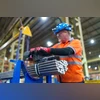 "A worker prepares to wrap cold drawn stainless steel bars at a factory in Sheffield")
A worker prepares to wrap cold drawn stainless steel bars at a factory in Sheffield | Image: Bloomberg
Listen to This Article
By Julian Harris
The UK is contending with a new five-week deadline to finalize its trade agreement with the US after President Donald Trump spared the country’s steel and aluminum exports from a doubling of existing tariffs.
The UK was granted an exemption from a higher 50 per cent levy that took effect overnight while it negotiates the details of a tariff-relief deal announced last month by Trump and Prime Minister Keir Starmer. But the White House proclamation implementing the new rate reserved the option of applying it to British steel and aluminum, if the president decides the UK isn’t complying with their agreement.
The result means that Britain still faces the threat of higher tariffs from the country’s closest ally, even as it scrambles to remove an earlier 25 per cent levy as agreed between Trump and Starmer. The US-imposed deadline ramps up the pressure on British trade negotiators, who had spent recent days trying to get the US to commit to a timeline for resolving unfinished aspects of the deal, such as the tariffs.
Also Read

 "Donald Trump")
 "Donald Trump, US President")
 "ONGC, OIL SECTOR, CRUDE OIL")
 "The National Public Radio headquarters in Washington.")
 "Elon musk, musk, Elon")
“We’re pleased that as a result of our agreement with the US, UK steel will not be subject to these additional tariffs,” the UK government said in a statement on Wednesday. “We will continue to work with the US to implement our agreement, which will see the 25 per cent US tariffs on steel removed.”
The longer UK steel and aluminum exports are subject to US tariffs the more questions will be raised about Starmer’s decision to become the first country to settle with Trump. The Prime Minister’s Office had promised while announcing the agreement on May 8 that US levies would be reduced to zero on the metals, saying the deal would save an industry that it described as being on the “brink of collapse.”
Business Secretary Jonathan Reynolds met US Trade Representative Jamieson Greer late Tuesday in Paris in an effort to speed up talks. They discussed “implementing agreements on sectoral tariffs as soon as possible” and “agreed that businesses and consumers on both sides of the Atlantic must start to feel the benefits of the deal soon,” according to a statement from Reynolds’s department.
The UK steel industry has warned repeatedly that tariffs on US imports could further imperil the viability of mills already battling against global overcapacity, depressed steel prices and weak demand in many key industrial sectors. The UK exports around 200,000 metric tons of steel per year to the US, worth over £400 million ($532 million), according to UK Steel.
Under the agreement announced last month, the British government said duties on metals exported to the US would be slashed to zero, and auto tariffs would be reduced to 10 per cent. In return, the UK agreed to fast-track US items through their customs process and reduce barriers on “billions of dollars” of agricultural, chemical, energy and industrial exports, including beef and ethanol.
China
The May deal, however, was contingent on the UK satisfying US demands about the ownership of its plants, which appeared aimed at accelerating Starmer’s efforts to take over the Chinese company running the country’s last blast furnaces. Britain took de-facto control of British Steel in April to prevent the closure of its two furnaces, but the loss-making company is still owned by Jingye Group.
The new White House proclamation raises the prospect that Starmer may have to speed up the process of finding a private partner or buyer. While the UK has said that a nationalization of British Steel remains the most likely outcome in the near-term, Starmer’s government has been reticent to act due to the high cost of taking on its losses of roughly £700,000 a day.
“This morning we do breathe a temporary sigh of relief that we’re only paying the 25 per cent tariff, not the 50 per cent tariff,” UK Steel Director General Gareth Stace told the BBC. “But what we really want to get to is those tariffs removed as agreed by the prime minister and president.”
More From This Section
 "Donald Trump, Trump")
 "Trade disputes with the Biden and first Trump administrations also helped tilt Chinese orders toward Airbus.")
 "Colorado firebombing, Boulder, Palestine")
 "china Flag, China")
 "murder")
Don't miss the most important news and views of the day. Get them on our Telegram channel
First Published: Jun 04 2025 | 1:45 PM IST