


John Clarke, Michel Devoret, John Martinis win 2025 Physics Nobel Prize
The Academy said that this year's Nobel Prize in Physics has provided opportunities for developing the next generation of quantum technology
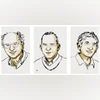 "nobel in physics, John Clarke, Michel Devoret, John Martinis")
The total prize amount of 11 million Swedish kronor will be shared equally among the laureates.
Listen to This Article
Three United States-based scientists, John Clarke, Michel H Devoret, and John M. Martinis, received the Nobel Prize in Physics on Tuesday for the discovery of macroscopic quantum mechanical tunnelling and energy quantisation in an electric circuit, the Royal Swedish Academy of Sciences said in a statement.
The Academy said that a major question in physics is the maximum size of a system that can demonstrate quantum mechanical effects. “This year’s Nobel Prize laureates conducted experiments with an electrical circuit in which they demonstrated both quantum mechanical tunnelling and quantised energy levels in a system big enough to be held in the hand,” it said.
The total prize amount of 11 million Swedish kronor will be shared equally among the laureates.
“It is wonderful to be able to celebrate the way that century-old quantum mechanics continually offers new surprises. It is also enormously useful, as quantum mechanics is the foundation of all digital technology,” said Olle Eriksson, chair of the Nobel Committee for Physics.
Also Read

 "Cancer cells")
 "Mary E Brunkow, Fred Ramsdell, and Shimon Sakaguchi")
 "Nobel, Nobel Prize")
 "Nobel Prize")
 "US President Donald Trump")
Winners of the Nobel Prize in Physics
- John Clarke: Born in 1942 in Cambridge, UK. Earned his PhD in 1968 from the University of Cambridge. Currently a Professor at the University of California, Berkeley, US.
- Michel H Devoret: Born in 1953 in Paris, France. Received his PhD in 1982 from Paris-Sud University, France. Serves as a Professor at Yale University, New Haven, Connecticut, and at the University of California, Santa Barbara, US.
- John M Martinis: Born in 1958. Obtained his PhD in 1987 from the University of California, Berkeley. Currently a Professor at the University of California, Santa Barbara, US.
Next generation of quantum tech
The Academy said that this year’s Nobel Prize in Physics has provided opportunities for developing the next generation of quantum technology, including quantum cryptography, quantum computers, and quantum sensors.
In 1984 and 1985, Clarke, Devoret and Martinis conducted a series of experiments with an electronic circuit built of superconductors, components that can conduct a current with no electrical resistance. In the circuit, the superconducting components were separated by a thin layer of non-conductive material, a setup known as a Josephson junction.
By refining and measuring all the various properties of their circuit, they were able to control and explore the phenomena that arose when they passed a current through it. Together, the charged particles moving through the superconductor comprised a system that behaved as if they were a single particle that filled the entire circuit.
This macroscopic particle-like system is initially in a state in which current flows without any voltage. The system is trapped in this state, as if behind a barrier that it cannot cross. In the experiment, the system shows its quantum character by managing to escape the zero-voltage state through tunnelling. The system’s changed state is detected through the appearance of a voltage.
More From This Section
 "Cop29, fossil fuel, climate change, pollution, 2024 global carbon project data for fossil fuel emissions")
 "Canada, Mark Carney")
 "Donald Trump, Greta Thunberg")
 "Kapil Raghu, Indian man")
 "Li Qiang, Chinese Premier")
Don't miss the most important news and views of the day. Get them on our Telegram channel
First Published: Oct 07 2025 | 3:26 PM IST