


Mary Brunkow, Fred Ramsdell, Shimon Sakaguchi win Nobel Prize in medicine
Mary Brunkow, Fred Ramsdell, and Shimon Sakaguchi win the 2025 Nobel Prize in Medicine for discovering regulatory T cells that protect the body from autoimmune diseases
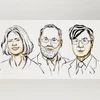 "Mary E Brunkow, Fred Ramsdell, and Shimon Sakaguchi")
Nobel prize in medicine awarded to Mary E Brunkow, Fred Ramsdell, and Shimon Sakaguchi
Listen to This Article
The 2025 Nobel Prize in physiology or medicine has been jointly awarded to Mary E Brunkow, Fred Ramsdell, and Shimon Sakaguchi for their discoveries concerning peripheral immune tolerance, the Nobel Assembly at the Karolinska Institutet announced on Monday.
The trio identified the body’s security guards, regulatory T cells, that stop immune cells from mistakenly attacking the body’s own tissues.
“Their discoveries have been decisive for our understanding of how the immune system functions and why we do not all develop serious autoimmune diseases,” said Olle Kampe, chair of the Nobel Committee.
Sakaguchi’s early breakthrough
In 1995, Shimon Sakaguchi made a discovery that changed how scientists understood the immune system. He discovered a new class of immune cells that protect the body from autoimmune diseases, a major step forward in immunology.
In 2001, Mary Brunkow and Fred Ramsdell uncovered another crucial part of the puzzle. While studying a mouse strain prone to autoimmune diseases, they found a mutation in a gene they named Foxp3. They also demonstrated that mutations in the human version of this gene lead to a severe autoimmune disorder known as IPEX. Two years later, Sakaguchi connected these findings by proving that the Foxp3 gene controls the development of the same immune cells he had discovered earlier. These cells, now called regulatory T cells, act as monitors that keep other immune cells in check and help the body tolerate its own tissues.
Also Read

 "Nobel, Nobel Prize")
 "Nobel Prize")
 "US President Donald Trump")
 "US Citizenship and Immigration Services")
 "Donald Trump, Trump")
The laureates’ discoveries laid the foundation for the field of peripheral tolerance and opened new paths for developing treatments for cancer and autoimmune diseases. Their research has also improved the prospects of organ transplantation with several therapies now undergoing clinical trials.
2025 Nobel Prize for physiology or medicine
Mary E Brunkow: Born in 1961, Mary E Brunkow earned her PhD from Princeton University in the United States. She currently serves as a senior program manager at the Institute for Systems Biology in Seattle.
Fred Ramsdell: Born in 1960, Fred Ramsdell completed his PhD in 1987 from the University of California, Los Angeles (UCLA). He now works as a scientific advisor at Sonoma Biotherapeutics in San Francisco.
Shimon Sakaguchi: Born in 1951, Shimon Sakaguchi obtained his MD in 1976 and PhD in 1983 from Kyoto University, Japan. He is a distinguished professor at the Immunology Frontier Research Center at Osaka University.
Nobel Prize 2025: Full schedule
• Physiology or medicine: October 6 (Monday), 11.30 CEST (3.00 pm IST). Announced by the Nobel Assembly at Karolinska Institutet, Wallenbergsalen
• Physics: October 7 (Tuesday), 11.45 CEST (3.15 pm IST). Announced by the Royal Swedish Academy of Sciences, Stockholm
• Chemistry: October 8 (Wednesday), 11.45 CEST (3.15 pm IST). Announced by the Royal Swedish Academy of Sciences, Stockholm
• Literature: October 9 (Thursday), 13.00 CEST (4.30 pm IST). Announced by the Swedish Academy, Stockholm
• Peace: October 10 (Friday), 11.00 CEST (2.30 pm IST). Announced by the Norwegian Nobel Committee, Norwegian Nobel Institute, Oslo
• Economic Sciences: October 13 (Monday), 11.45 CEST (3.15 pm IST). Announced by the Royal Swedish Academy of Sciences, Stockholm ALSO READ: Nobel Prize 2025 : Full list of winners
More From This Section
 "Iran, Iran flag")
 "Workplace stress")
 "Yen, Japan Currency")
 "Donald Trump, Trump, Benjamin Netanyahu, Benjamin")
Don't miss the most important news and views of the day. Get them on our Telegram channel
First Published: Oct 06 2025 | 3:12 PM IST