


Why US brands are ditching American roots to reach international markets
Amid rising tariffs and global anti-American sentiment, major US companies are shedding national imagery and localising ads to stay competitive abroad
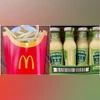 "McDonald's and Kraft Heinz")
Businesses such as McDonald's and Kraft Heinz have launched aggressive campaigns to reframe their identity in foreign markets. (Photos: Wikimedia Commons, Flickr)
Listen to This Article
Recently, US President Donald Trump emphasised the strategic importance of his tariffs, stating while the Americans may face some "short term pain", they will reap benefits in the long term. However, many American businesses are facing increasing difficulties due to these tariffs.
For these businesses, being proudly American isn’t the global selling point it once was. From fast food giants to fashion startups, US brands are quietly shifting how they present themselves abroad—trading stars-and-stripes branding for local relevance and cultural camouflage.
A growing number of American businesses are now asking: How do we not look American?
Tariffs and tensions trigger a marketing rethink
According to Luke Jonas, co-founder of the UK-based marketing agency Nest, many of his clients who previously targeted the US are now looking elsewhere. “In 20 years of working in e-commerce, I’ve never seen such a dramatic shift in brand behaviour,” Jonas told Business Insider.
Over two-thirds of Nest’s clients have pivoted from US markets toward Europe and the Middle East—regions perceived to be less politically fraught and more cost-effective due to tariff circumvention.
Also Read

 "Donald Trump, Trump")
 "US China flag, US-China flag")
 "trade, tariff")
 "external commercial borrowing, ECB, dollar")
Jonas said one American fashion brand, Fresh Threads, known for its Southern California skateboarding vibe, recently began swapping its iconic beach imagery for scenes set in British parks to resonate with UK audiences. It's a vivid example of how brands are responding to cultural undercurrents by downplaying their American identity.
From Coca-Cola to Kraft: Going local, staying relevant
This rebranding drive isn’t limited to newcomers. Legacy brands such as Kraft Heinz and Coca-Cola are also treading lightly when it comes to their American roots.
In response to lingering resentment over a factory closure in Ontario and Trump's early tariffs against Canada, Kraft Heinz launched an aggressive campaign to reframe its identity. According to the Business Insider report, ads emphasised that its products were made in Canada with Canadian ingredients—wheat, dairy, and tomatoes. The message was clear: this isn’t a foreign corporation, it’s part of your community.
Coca-Cola, one of America’s most globally recognised brands, has embraced a similar strategy. CEO James Quincey recently explained that during moments of international tension, “One of the key strategies is to drive and reinforce the ‘made in’ or ‘made by’ messaging.”
By emphasising that its products are manufactured locally by local workers, Coca-Cola distances itself from the American flag while still maintaining global consistency.
Similarly, McDonald’s in Europe, while not rebranding itself, launched marketing around community and local farmers. McDonald’s France for instance has long-run ads about how its ingredients – lettuce, wheat for buns, potatoes – come from French farmers, implicitly distancing the end product from its American origin. Post-2025, these efforts intensified across various markets as McDonald’s sought to reassure customers that Big Macs are locally sourced and made by your fellow countrymen.
There were some companies which failed to adapt. Iconic products like Jack Daniel’s whiskey faced removal from Canadian stores until mitigating actions were taken.
Backlash drives quiet rebranding
Rising anti-American sentiment is more than a public relations headache—it's a measurable commercial risk. McDonald’s CFO Ian Borden said during a recent earnings call that three global surveys revealed an 8 to 10-point increase in anti-American feelings across regions like Northern Europe and Canada. The same surveys also found that more people were actively cutting back on American brands.
To avoid becoming a political casualty, many companies are adopting what experts call “de-Americanised” marketing. Dr Minkyung Kim, a professor at Carnegie Mellon University, told Business Insider that brands are "localising and ‘de-Americanising’ their marketing where needed, without completely abandoning their identity."
It’s a delicate balancing act. The goal is not to erase American heritage altogether, but to strip it from the spotlight—especially in ads running in countries with rising nationalistic sentiment. In markets like Germany or France, this might mean dropping overt American visuals, hiring local influencers, or even adjusting product names and packaging to suit local tastes.
Made in America—but terms and conditions applied
Ironically, while brands downplay their American roots abroad, many are doubling down on national pride at home. Ford’s recent campaign, 'From America. For America', aired in the US as a celebration of domestic manufacturing. Similarly, brands like American Giant and Jeep have emphasised their US origins to appeal to patriotic American consumers and lobby against tariffs.
This two-pronged strategy—local abroad, patriotic at home—is made possible by digital tools that allow for region-specific targeting. As Joey Camire, CEO of strategy firm Sylvain, noted, the rise of AI and influencer-driven marketing has made localisation cheaper and more scalable than ever before.
Companies are becoming adept at cultural code-switching. They highlight their American legacy where it wins hearts and quietly sidestep it where it draws fire. As Luke Jonas puts it, “They’re not abandoning their identity—they’re just adapting it.”
More From This Section
 "Vladimir Putin, Putin")
 "china Flag, China")
 "Trump statue, Trump")
 "Brazil floods")
 "Israel attacks on Gaza")
Don't miss the most important news and views of the day. Get them on our Telegram channel
First Published: May 11 2025 | 12:10 PM IST